Join our mailing list. We never spam.

Recent content from Jeff Kim

Person running in pink sneakers through snowy conditions

Fitness

Apr 11, 2019

How Many Calories Does Walking 10,000 Steps Burn?

Editor’s Note: This post was updated on March 23, 2026, for accuracy and comprehensiveness. It was originally published on April 27, 2016

Walking 10,000 steps a day is often promoted as a simple way to burn calories and lose weight. But how many calories does 10,000 steps burn in reality?

The short answer: it depends. Your body weight, walking speed, and overall activity level all play a role, and the number can vary more than most people realize.

In this article, we’ll break down how many calories 10,000 steps burn, explain why the results aren’t the same for everyone, and show how walking fits into a realistic weight‑loss plan backed by science.

Key Takeaways

  • For most people, walking 10,000 steps burns around 300 to 500 calories, depending on how much you weigh and how fast you walk.

  • Walking alone won’t lead to fat loss unless you're also in a calorie deficit, meaning you burn more calories than you eat.

  • That said, walking has major health benefits: it improves heart health, boosts mood, supports mobility, and helps build a healthy lifestyle.

Is 10,000 Steps a Day Really the Magic Number?

Black and white close-up of the legs and feet of three people running together on a paved path.

You’ve probably heard that walking 10,000 steps a day can burn around 3,500 calories in a week, which is often linked to losing one pound of fat. It’s a popular idea among some fitness sources, and it comes from a long-standing rule of thumb in nutrition that’s still widely referenced today.

That rule is based on the idea that one pound of body weight equals about 3,500 calories. From there, the math seems straightforward: burn or cut around 500 extra calories a day for seven days, and you’d theoretically reach that 3,500-calorie mark.

At first, it seems pretty simple.

The problem is that this calculation only works in certain situations. It depends on things like your body, your pace, and what you’re eating. For many people, hitting 10,000 steps alone does not lead to weight loss.

Let’s take a closer look at why.

How Many Calories Are Burned in 10,000 Steps?

The number of calories you burn from walking 10,000 steps depends on a few things, including your body weight, how fast you walk, and your stride length. In other words, it looks different for everyone.

That said, we can use a general example to see how the math usually works.

Here’s a common estimate:

  • 10,000 steps is roughly equal to 5 miles

  • A 180-pound person burns about 100 calories per mile

  • That adds up to about 500 calories for 10,000 steps

  • Over a week, that’s 500 calories a day times 7 days, or 3,500 calories

But this example only works if you weigh around 180 pounds.

If you weigh less, your body uses less energy to move the same distance. For example, a 120-pound person burns closer to 60 calories per mile. That means:

  • 60 calories per mile times 5 miles equals about 300 calories a day

  • Over a week, that’s 2,100 calories burned

That’s about 1,400 calories short of the 3,500 calories often linked to losing one pound of fat.

Bottom line: How many calories does 10,000 steps burn depends on how much you weigh, pace, and effort. The heavier you are and the faster you walk, the more calories you tend to burn. If you weigh less, walking the same number of steps will burn fewer calories, even if the distance stays the same.

Here’s a general estimate to help you put things into perspective:

Body Weight

Estimated Calories Burned from Walking 10.000 Steps

120 lbs (54 kg)

~300–340 calories

150 lbs (68 kg)

~350–400 calories

180 lbs (82 kg)

~420–480 calories

210 lbs (95 kg)

~480–550 calories

How Speed Affects Calories Burned from 10,000 Steps

On average, 10,000 steps equals about 5 miles. But it really depends on how fast you walk. Walking speed plays a big role in calorie burn, even when the distance stays the same.

Let’s look at examples of different types of bodies walking for 30 minutes and approximately how many calories they burn depending on their speed:

Speed (level ground)

120 lb

150 lb

180 lb

210 lb

2–2.4 mph (easy)

80 calories

100 calories

120 calories

140 calories

2.5 mph (casual)

86 calories

107 calories

129 calories

150 calories

2.8–3.4 mph (moderate)

109 calories

136 calories

163 calories

190 calories

3.5–3.9 mph (brisk)

137 calories

171 calories

206 calories

240 calories

4.0–4.4 mph (very brisk)

157 calories

196 calories

236 calories

275 calories

4.5–4.9 mph (very, very brisk)

200 calories

250 calories

300 calories

350 calories

5.0–5.5 mph (power walk)

243 calories

304 calories

364 calories

425 calories

As you pick up the pace, your heart rate goes up, and your body uses more energy, even if you’re walking the same distance.

One important thing to keep in mind: Many claims about “10,000 steps leading to one pound of weight loss per week” assume a brisk walking pace. If you walk more slowly or don’t cover the full distance, you will burn fewer calories.

And one last reminder: Hitting your step goal alone does not guarantee weight loss. Walking helps support fat loss, but it only works when your overall calorie intake stays in check.

Why Walking Alone Won’t Lead to Weight Loss If You Overeat

Top-down view of a colorful salad bar featuring various fresh vegetables, greens, beans, and proteins in white and black containers.

Walking helps you burn more calories. But if you are still eating more than your body needs, fat loss will not happen. This is where calorie balance matters.

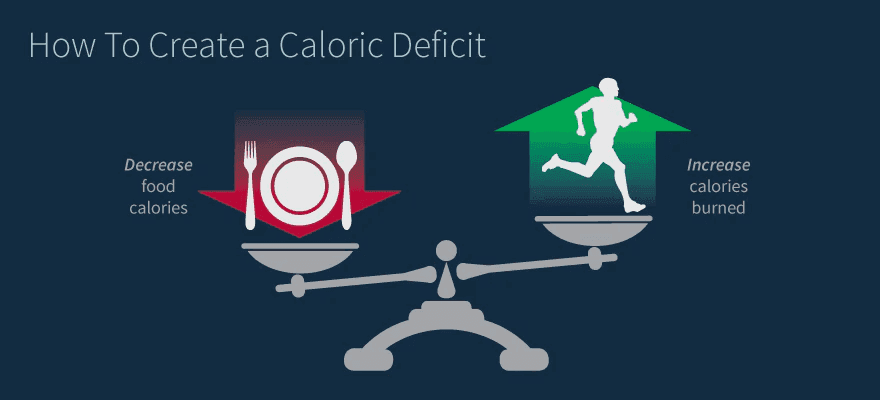
To lose weight, your body needs to burn more calories than it takes in. This is called a calorie deficit.

Let’s look at a real-life example to see how this plays out.

Example 1: No Fat Loss from Caloric Balance

Let’s look at a 180-pound person who:

  • Burns about 1,800 calories per day at rest

  • Walks 10,000 steps and burns an extra 500 calories

That brings their total daily calorie burn to 2,300 calories.

Now, if that same person eats 2,300 calories in a day:

2,300 calories in − 2,300 calories out = zero.

That’s calorie balance.

Result: No fat loss and no weight gain. The body simply maintains its current weight.

Example 2: Fat Loss with a Calorie Deficit

Now let’s look at the same 180-pound person, but with one key change.

They still walk 10,000 steps and burn about 500 calories, but this time they eat 1,800 calories for the day.

  • Total calories burned: 2,300

  • Calories eaten: 1,800

2,300 burned − 1,800 eaten = a 500 calorie deficit

Result: This person is in a calorie deficit, which is the starting point for fat loss. If they keep this pattern for seven days, they would burn about 3,500 calories, which is roughly equal to one pound of fat.

Want to Know If This Would Work for You?

That depends on your own metabolism, especially two key numbers: your Basal Metabolic Rate (BMR) and your Total Daily Energy Expenditure (TDEE).

Here’s a simple way to estimate them and use BMR to lose weight:

  • Start with a body composition test, which can measure things like body fat percentage and lean mass. Some result sheets include your BMR directly.

  • Multiply your BMR by 1.2 to estimate how many calories you need to maintain your weight without extra exercise.

Once you understand your BMR and TDEE, you can set calorie and activity goals that actually fit your body, rather than relying on a one-size-fits-all step count.

What Matters More Than Hitting 10,000 Steps

When it comes to burning calories, improving health, or losing fat, the way you walk often matters more than the number on your tracker.

That’s why two people can both hit 10,000 steps in a day and still see very different results.

Walking Pace and Intensity

A slow, relaxed walk burns fewer calories than a brisk walk that gets your heart pumping. Even if your step count stays the same, walking at a faster pace increases the amount of energy your body uses.

Heart Rate and Effort

Calorie burn is closely linked to effort. Walking that raises your heart rate into a moderate-intensity range provides greater cardiovascular benefits and burns more calories than low-effort movement.

Time and Distance Matter

Ten thousand short, easy steps spread throughout the day is not the same as walking about five miles at a steady pace. Longer, continuous walks tend to have a bigger impact on both calorie burn and overall fitness.

Muscle Mass and Body Composition

Step count alone does not account for body composition. People with more lean muscle typically burn more calories, both at rest and during activity. This means two people who weigh the same can burn very different amounts of calories, depending on their muscle-to-fat ratio.

Walking Works, Even If Weight Loss Is Not the Result

Infographic showing how to create a caloric deficit using a balance scale to compare decreasing food calories and increasing calories burned.

Even if walking does not lead to weight loss on its own, it is still one of the best things you can do for your overall health.

Research consistently shows that regular walking supports heart health, helps lower blood pressure, reduces the risk of chronic conditions, and may even help you live longer. Adults who walk around 7,000 steps per day have a much lower risk of cardiovascular disease and early death compared to those who are less active.

Another recent study found that walking in continuous sessions of 10 to 15 minutes can be especially beneficial. Compared to scattered movement throughout the day, longer walking sessions were linked to a lower risk of heart attack, stroke, and other cardiovascular events.

Walking also makes it easier to meet the recommended 150 minutes of moderate-intensity aerobic activity per week, as advised by the American Heart Association. Because it is low-impact and easy to adjust to your fitness level, walking works well as a warm-up, a stress reliever, or a full workout on its own.

a hand holding the end of a sparkler

Medical

Dec 1, 2018

Why Your Body Composition Is The Key To Your Health in 2019

This post was updated on December 1, 2018, for accuracy and comprehensiveness. It was originally published on December 26, 2016.

If you have been following this blog for a while, you are aware that body composition analysis is being used by many fitness experts, coaches, and healthcare professionals, and is essential if you truly want to get a handle on becoming fit.

But now might be the perfect time to emphasize the actual health risks and benefits associated with various body compositions, especially as we enter into 2019, with all those New Year’s resolutions fresh on our minds.

One thing we can safely do in 2019 is dump our reliance and our attention on the body mass index (BMI) as a means to measure our health.

The limitations of using the BMI to guide clinical and fitness decisions have been well documented, and it may be time to just say goodbye to BMI altogether when it comes to making decisions concerning a single individual, as outlined previously in this blog or as highlighted by many others.

Not having specific detailed insights into your personal body composition may lead to critical errors in assumptions, understanding, and recommendations, which can hinder your ability to reach your fitness goal. In fact, in some cases, it may even result in serious misdiagnosis, inappropriate treatments, and certainly missed opportunities.

We all know that besides our appearance, there is a long list of diseases that are obviously associated with obesity, which seems (and we will address this in a minute) to be the thing that is a the top of our minds this time of year. The list is long, but certainly includes heart disease, hypertension, cancer, joint problems, dementia, and diabetes.

But what about other abnormalities of body composition, like having too little muscle mass –  so-called “skinny fat” – when there is both sarcopenia (lack of muscle) and the sometimes less obvious visceral fat that can collect around the middle even for people whose BMI is normal (18-25)?

These are definite concerns that impact everyone, which is why a knowledge of your body composition is important for your health in 2019 and beyond.

The Elephant in the Room

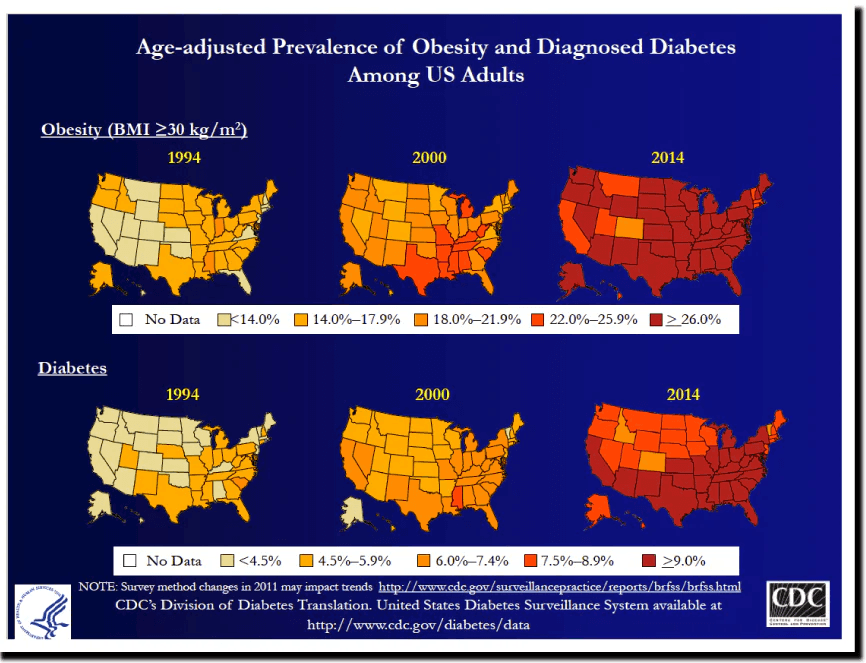
Source: CDC

With so many different ailments related to body composition, let’s just spend a bit of time looking at one, if not the biggest, problem facing you and our nation today: diabetes.

In the September 8, 2015 edition of JAMA: the Journal of the American Medical Association, it was estimated that 52.3 % of the entire US population in 2012 had either diabetes (14.3%) or so-called prediabetes (38.0%).

But if that is not bad enough, a UCLA study in 2016 reported that in California, 55% of the state either have diabetes (9%) or have pre or undiagnosed diabetes (46.0%).  This is a true epidemic.

If you are just looking at the risks and causes of diabetes in those who are overweight or obese, you just might miss many opportunities to prevent, treat, or even reverse diabetes. A reliance on traditional metrics like the BMI and body weight could leave you in the dark.

Think about it this way: The use of the BMI assumes that the human body is composed of one homogeneous mass, when in fact, different tissue types (fat, muscle, etc) have significantly different mass, different volume, and different functions and impacts, not just on our appearance, but also on our metabolic health as well.

Let’s look at a group of people with normal BMIs.  Per gram, fat (which is what we seem to always be focusing on)  is about 14% larger than muscle by volume.

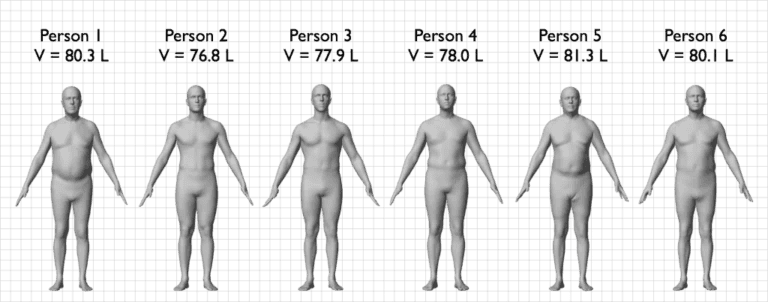
To visualize the implication, look at the images below of six actual men, all of whom are 5 feet 9 inches tall and 172 pounds. Many might be envious of their 25.4 BMI and most physicians, as they glance at their EMR computer screens, would congratulate and applaud. But looking at the actual patient or their scans via modern technology is instantly revealing.

Source: Body Labs

You may notice that Person 2 has a total volume of 76.8 L and visually appears much different than Person 5, who has a volume of 81.3 L.  Person 5 takes up roughly 6% more volume. Where is that extra 6% coming from? Body fat.

Notice particularly the difference in the midsection, where the abnormal accumulation of visceral fat occurs in metabolic syndrome, or what is becoming known as adiposity disease.

But what if we could learn what the actual body composition is for each of these men? What if we knew just how much muscle they had and how it is distributed?  What if we could determine how much fat a person carries around, and where that fat was located?  How might that knowledge change how one approaches attaining their fitness goals in 2019?

Maybe more importantly: How might that knowledge affect how one might approach or treat a person who was recently diagnosed with this ever so common disease, diabetes?

These questions are no longer just theoretical with the advent of state of the art tools to determine individual body composition in the gym or in the modern exam room in real time.

A Recent Clinical Example: Diabetes Reversed with A Better Body Composition

So let’s look at a recent clinical example highlighting how 21st century body composition analysis (BIA) can be used in day-to-day clinical practice to rapidly identify,  address, and in this case, ultimately reverse type II diabetes.

As you’ll see, diabetes can potentially develop over time undetected when poor body composition goes unreported.

A case study 

“Vihaan” (not his real name) got some bad news, and it was not at all what he expected.  He knew that something was wrong because he was not feeling right and that he seemed to be much more tired than usual.

A successful entrepreneur, his company was taking off, and his young family was growing and doing well.  But he was not.  It seemed like all of a sudden he began to be thirsty – really thirsty.  And then, came the never ending trips to the men’s room.

At 42, seemingly in good health and not at all “overweight”, he found out that he was diabetic, with a blood sugar of 265 mg/dl. Vihaan was shocked, he landed in his ophthalmologist’s office for the required eye examination, taking two diabetes medications, and beginning to get the blood sugar under control.  But he was not at all happy about it and really wanted to know if his eyes were affected by diabetes and what if anything, he might do to get to the root of the problem.

The fear associated with newly diagnosed diabetes is great, especially the fear of losing vision.   

Patients are often very motivated – maybe the most motivated they will ever be – to take action to avoid going blind. Nothing gets their attention like the thought of blindness, unless it the diagnosis of possibly cancer (a topic for a future post).  It is a golden opportunity to affect change in behavior, often the very behavior that has caused the problem in the first place.

After a careful eye examination, it was determined that, thankfully, he had no evidence of diabetic retinopathy, the potentially blinding condition that destroys the circulation to the eye.

It is often the first sign of damage due to diabetes and reflects the changes that are happening throughout the body, especially in the kidney, heart, brain, and peripheral nerves.

Excessive glucose in the circulation damages the delicate capillaries resulting in their eventual loss and destruction. This leaves the surrounding tissue starving for oxygen and nutrition.

Even though Vihaan’s eyes were unharmed for the time being,  the question remained: Why was this active young man in the prime of his life diabetic?  His weight was normal for his height: that is, his BMI was less than 25.  Sure, South Asians are known to get diabetes more readily and often at lower BMI’s but why now, and what could be done?

After a short discussion about the underlying drivers of diabetes, Vihaan was eager to learn more.  He was offered the opportunity to have a body composition analysis performed using the InBody 570 device.

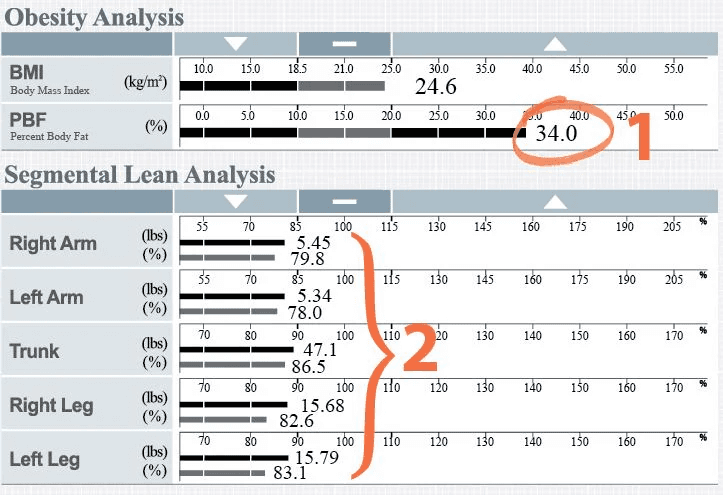
In about three minutes the following print out was in the hands of both he and his physician.  Two significant things quickly became evident:

  1. Though his BMI was 24.6, his percent body fat was significantly elevated at 34%.  His BMI could be considered “great”, but he was metabolically in trouble.

  2. Vihaan’s muscle mass was significantly low in all four limbs and in his trunk as well. Here’s what was disguising Vihaan’s “normal” body weight and contributing to his high body fat percentage: low muscle mass.

A picture is worth a thousand words, and viewing and interacting with your data visually speaks volumes.

For Vihaan and his doctor, the data spoke volumes.  Now, they were in the realm of “show me” medicine, not just “tell me”.  Vihaan was now interacting with his own actionable data, generated in real time.

A conversation followed and the patient was now engaged in his own care with a plan to address both his severe lack of muscle and the obesity in his trunk.

Sarcopenia and Obesity in Type II Diabetes

Without body composition analysis, the degree of Vihaan’s sarcopenia would not have been appreciated, and neither would the 28 pounds of fat he was carrying in his trunk.

Doing a quick calculation of his Skeletal Muscle Index (absolute muscle mass/m2) revealed he was 8.931, approaching the severe range of sarcopenia.

Vihaan’s case might be extreme, but it’s hardly uncommon.

Much research has been done to reveal the association of increased visceral adipose tissue (VAT), the fat that is located in the midsection in and around your organs such as the liver and intestines, and diabetes.  Work has also shown that specifically in South Asians, the visceral fat explains much of the increased incidence of diabetes, particularly in males, compared with other ethnic groups, even at BMI levels of 25 or less.

However, disruption of skeletal muscle function has been shown to be the primary defect in type two diabetes as reported by DeFronzo in 2009. Reduction in insulin sensitivity can be documented as early as ten years before clinical diabetes is manifest, though the exact cause remains a matter of intense investigation.

Until recently, it has not be practical to obtain detailed measurements of both fat mass and muscle mass in the busy office setting.

However, low muscle mass, or sarcopenia,  is now being appreciated also as factor in the development of diabetes.  Muscle tissue is responsible the disposal of 80% of the glucose from a given meal.  With less muscle tissue, more glucose remains in the circulation and thus raises blood sugar levels.

Not only is low muscle mass a problem, but so is poor muscle quality.  When muscle mass is reduced, the muscle’s ability to produce energy by burning fats and glucose is also reduced.  This appears to be the result of reductions in the number and metabolic activity of the mitochondria, the powerhouse of the cells.

Having fewer and poorly functioning mitochondria can then lead to inflammation which has been shown to be a factor in insulin resistance and thus type II diabetes.

A happy ending

Vihaan’s story had a very happy ending, as he was able to follow a plan of weight training, consistent aerobic exercise, and a higher protein and lower carbohydrate diet.  In less than a year, he was off all diabetes medication and has effectively reversed his diabetes.

Though every case is different and certainly not every patient is likely to be able to reverse diabetes as Vihaan’s did, addressing both his obesity and low levels of muscle mass worked powerfully together turn his situation around.

So what might have been a more typical alternate scenario? This 42-year-old gentleman was placed on two diabetes medications and had he not taken charge of his diet and exercise, he would likely have been on some sort of medication for the remainder of his life.

Instead, through body composition analysis, he became empowered, and his unique individual metabolic profile was identified in mere minutes when he was most ready and willing to take action.  The clinical encounter had been leveraged; the fear of blindness may well have been his lever to achieve profound behavior change.

As you look into the New Year

So as you stand at the threshold of a new year and think about your health and fitness goals, remember that relying on your BMI or your body weight alone can fool you.

Without a proper understanding of your personal body composition, you may just head off in the wrong direction or miss out on important opportunities to make major improvements.

Seek out ways to discover your body fat percentage and lean body mass and use this knowledge to your advantage in the coming weeks and months to help you live a healthier life. Your future you will thank you for it!

**

Michael Mong, M.D., is board certified in Ophthalmology and a Diplomate of the American Board of Obesity Medicine. He has a special interest in the prevention and reversal of pre-diabetes, diabetes, and Alzheimer’s disease, as well as Functional Medicine. You can connect with him on Linkedin. 

asparagus and steak on a plate

Nutrition

Aug 10, 2018

What You Never Knew About Meal Frequency

Editor’s Note: This post was updated on August 9, 2018, for accuracy and comprehensiveness. It was originally published on November 20, 2017.

You know your diet has a lot to do with your weight and body composition.

When it comes to weight loss and maintenance, the number one strategy people use is modifying their eating patterns.

Most people emphasize their food choices, and that’s definitely encouraged. Watching what you eat is important.

But meal frequency is another dietary variable of your eating pattern that often gets overlooked. Hand-in-hand is meal size. How do those qualities of your meals affect your weight?

In athletics, research has established timing and quantities for food intake that maximize performance. But people just trying to shed a few pounds are often less sure of how to optimize their meals.

Over 50 years ago, research suggested that eating smaller meals more frequently was associated with lower weight, higher metabolism, and better metabolic health. More recently though, that notion has been under scrutiny.

So which is better for weight loss and your metabolic health? Small, frequent meals throughout the day? Or larger meals at regular times?

Before figuring out how to optimize your meals for weight loss, let’s first take a learn how your body digests meals, and why their frequency and size matters.

Meal Physiology and Why Frequency Matters

THERMIC EFFECT OF FOOD

Each time you eat a meal, your metabolism, or more specifically metabolic rate, increases. That’s because all the processes for digestion and absorption require energy and blood flow.

Since increasing your metabolic rate means expending energy and generating heat, this phenomenon is called the ‘thermic effect of food.’

On average, your metabolic rate increases by 25% after a meal. Of course, that number varies with factors like hormone levels, circadian rhythm, and weight fluctuation.

But a substantial contributor to variation in the thermic effect of food is the size of the meal. Larger meals require more energy to power digestion, so they increase metabolic rate more than smaller meals.

GUT HORMONES

When a meal hits your stomach and intestines, it triggers your digestive tract to release hormones that affect satiety. Collectively they’re called gut hormones, but each one has specific actions and effects (examples include PYY, GLP-1, and GIP).

Gut hormones matter because they signal your body to slow down or stop eating. It’s no surprise, then, that the size of a meal influences the quantity of gut hormones that are released.

Your body releases greater quantities of gut hormones in response to meals with greater caloric density. Since larger meals tend to contain more calories, this is one reason you feel more satiated after larger meals. Smaller meals are less satiating, meaning you’re likely to want to eat sooner after that meal.

SO WHAT?

The period after a meal during digestion and absorption of macronutrients is known as the postprandial state. That’s important to understand because your body is in ‘storage mode’ in the postprandial state.

Even though your metabolic rate increases after a meal, the contents of that meal still get broken down and, for the most part, stored. About four hours after a meal, your body is back to its baseline ‘fasted’ state, during which it primarily burns through your stores.

By consuming frequent, smaller meals throughout the day, you spend a greater portion of the day in a postprandial ‘storage’ state, despite a slightly elevated metabolic rate. As we noted above, you also don’t give your body the chance to release a larger quantity of satiating gut hormones, so you may feel hungry throughout the day.

Keep these points in mind as you read on about how using meal frequency and size as part of your strategy.

Spacing Your Meals For Better Body Composition
DISPELLING COMMON BELIEFS

Remember the 1960’s study that showed frequent, smaller meals were better for maintaining a lower weight? It’s time to dispel that common belief.

When people try losing weight on a low-calorie diet, they often think that spreading their calories throughout the day will keep their appetite down and make it easier to stick to the diet.

That’s not necessarily true. Preliminary research shows that high eating frequency (8x/day) results in more hunger and desire to eat, and less fullness than low eating frequency (3x / day).

Why? The study wasn’t designed to find out. But it may have had something to do with the differences in how larger and smaller quantities of food are digested and their effects on gut hormones and satiety.

In any case, that study is only one piece of the puzzle. Appetite matters, but the result we’re after is improved body composition.

In a two month trial, eating one meal per day resulted in a greater loss of fat mass than eating 3 meals per day. While the actual number of meals per day in this study was different than others you’ve read about, this result shows that eating fewer meals per day can help you achieve a better body composition, especially in the short-term.

EVIDENCE FROM LARGER STUDIES

Epidemiological research on meal frequency shows that more frequent eating is associated with higher weight.

Since epidemiological data is usually observational and collected on large groups, it’s not always useful for explaining why things happen. But, it’s a great way to get an idea of what works in general and what doesn’t.

In a study of almost 20,000 people, researchers found that men and women were about 1.5 times as likely to be overweight or obese if they ate five or more times per day (compared to three or fewer times).

While that doesn’t explain why more frequent eating was associated with higher weight, it’s important to note that this was true even for people whose eating occasions were classified as ‘snacks.’ The high-frequency eaters weren’t all wolfing down five full meals a day.

The evidence from this type of research becomes a bit stronger when participants are followed over time. That way, it’s possible to observe changes, rather than simple associations at a snapshot in time.

In a study that followed thousands of men over a decade, researchers found that those who ate more than 3 meals per day were about 15% more likely to gain 11 pounds over the decade.

It’s tough (or impossible) to tell from these studies whether eating fewer meals will directly lead to weight loss or lowering chances of weight gain, but you can conclude that people who eat less frequently tend to keep extra weight off.

Also, keep in mind that it’s not the number on the scale that truly matters. Body composition is far more important than weight since it’s possible to be ‘heavy’ but packed with muscle. On the other hand, you want to avoid being ‘skinny fat.’

Clinical studies are helpful for figuring out whether you should actually follow a strategy. Keep reading to find out how meal frequency affects your appetite and body composition.

WHY MEAL FREQUENCY MATTERS

So, why is it that lower meal frequency seems to be better for weight and fat loss than eating throughout the day?

The answer has to do with the physiology of your meal intake. In another study that found eating twice (rather than six times) per day is better for weight loss, the gut hormone response to lower meal frequency meant subjects were more likely to eat breakfast. More on that soon, but for now just know that eating breakfast may help you achieve weight and fat loss.

Research also shows that fewer eating occasions throughout the day result in greater production of one of the key hormones that increase satiety after a meal, PYY. Higher protein intake was also associated with greater satiety. That means it should be easier to stick with a low-calorie diet if you eat your allotted calories in just a few meals per day. Make sure to get your protein requirement in too!

Beyond Meal Frequency

BREAKFAST MATTERS

Lower meal frequency isn’t the only strategy you should consider to aid your body composition goal. You can combine meal frequency with other habits to boost your chances even more.

Many people swear by eating breakfast as a key strategy for losing and maintaining weight loss.

But what does the science say? In people who have some weight to lose, and especially those individuals who don’t normally eat breakfast, starting the day off with a healthy meal can help you lose weight and minimize compulsive snacking.

Making breakfast a high protein meal could also contribute to lowering your fat mass. And there’s new research that breakfast may improve your metabolic health. But the common theme these studies share is that getting your calories earlier in the day is best for fat loss.

CALORIE RESTRICTION VS FASTING

Compared to meal frequency and distribution strategies, calorie restriction and fasting are more traditional ways of losing weight and fat. These are important strategies to be aware of, especially because calorie restriction can be combined with meal frequency.

While calorie restriction (CR) is self-descriptive, intermittent fasting and alternate day fasting aren’t as well known.

Intermittent fasting involves going for long stretches of the day (and night) without eating, and getting all your nutrition in a shorter time-frame.

Alternating day fasting involves alternating days of eating normally, and not eating at all.

So which strategy is right for you?

To start with, CR will help you lose weight and fat in almost all cases since it induces and energy deficit. It’s also more effective than intermittent fasting, and not as difficult to stick with.

Alternate Fasting results in the same amount of weight loss as CR, so you could try either strategy. Just keep in mind that sticking with Alternate Fasting in the long-term may be difficult, since you’re likely to be hungry on fasting days.

ENERGY DEFICIT IS KING

If you’re trying to lose weight or fat, it can be appealing to go after strategies like fasting or adjusting meal frequency. But keep your eye on the prize, and recognize that the most important step you can take is a moderate reduction in calorie intake.

To lose weight, you need to be in an energy deficit. No amount of adjusting your meal frequency can change that.

Here’s some evidence to support that: on the same amount of energy deficit, research participants lost the same amount of weight and fat on a high meal frequency plan as a low-frequency plan.

That’s not to say meal frequency doesn’t matter; it does, as you’ve seen throughout this article. Under a low-calorie diet, people eating two meals per day lost more weight than those eating six per day. But without an energy deficit, neither high or low-frequency eating groups lose weight.

Implications Beyond Weight Loss

As with any routine change or lifestyle intervention you try, there’s a possibility of unintended consequences with altering meal frequency to try to achieve your body composition goals.

During normal conditions, protein contributes minimally to energy production. But after extended periods without eating, when carbohydrate and fat stores have been broken down, protein is broken down in greater quantities to provide energy.

That means one potential unintended consequence is muscle breakdown with strategies like intermittent fasting and alternate fasting. Even with reducing meal frequency, some research finds that two meals per day result in diminished lean body mass compared to six meals per day.

On the other hand, in resistance trained men, fasting strategies like IF may not cause a loss of muscle mass.

The jury is still out as to whether fasting and reducing meal frequency impact muscle mass. In the study on resistance trained men who did not lose muscle, they consumed substantial quantities of protein each day, potentially warding off and muscle mass loss.

Regardless, it’s important to be aware that you could run into unintended consequences with any dietary changes you make. To avoid a situation like muscle loss, make sure to plan your dietary strategy thoroughly when making changes. And make sure to incorporate a regular strength training routine to preserve or maybe even gain muscle. Strength training can even increase your metabolism.

Conclusions

Meals affect your physiology, and your diet has a major impact on your body composition. Altering your eating frequency can affect your ability to reach your body composition goals since meals affect metabolic rate, gut hormones, and satiety.

At this point, the research isn’t definitive about reducing your meal frequency. But, some promising studies suggest it’s a strategy that could work. Here are a few key points:

  • Lower eating frequency is associated with weight and fat loss.

  • Energy deficit (calorie restriction) is critical to achieving weight and fat loss.

  • Breakfast is important for your metabolic health.

  • Exercise regularly to keep up your metabolic rate, energy expenditure, and health and fitness level while you lose weight.

While consuming two meals per day generally seems like the most effective strategy for weight and fat loss, it may not work for you.

Make sure to mitigate unintended consequences by defining your goals and planning your dietary strategy before you get going. Define your goals clearly, write down how you plan to change your diet, and assess body composition on a regular schedule to find out if your plan is working.

Remember that there’s no ‘magic pill’ solution to achieving your body composition goals. Only dedication and hard work will get you there. But if you’re looking for a bit of a leg up, consider maximizing your dietary strategies.

**

Max Gaitán, MEd is an exercise physiologist and a USA Triathlon Certified Coach. When he’s not coaching, studying, or writing, Max spends most of his time outdoors training for triathlons.


Get updates worth your time.

5,000,000+ users

Get updates worth
your time.

5,000,000+ users

Get updates worth
your time.

5,000,000+ users

Product

Software

Resources

Company