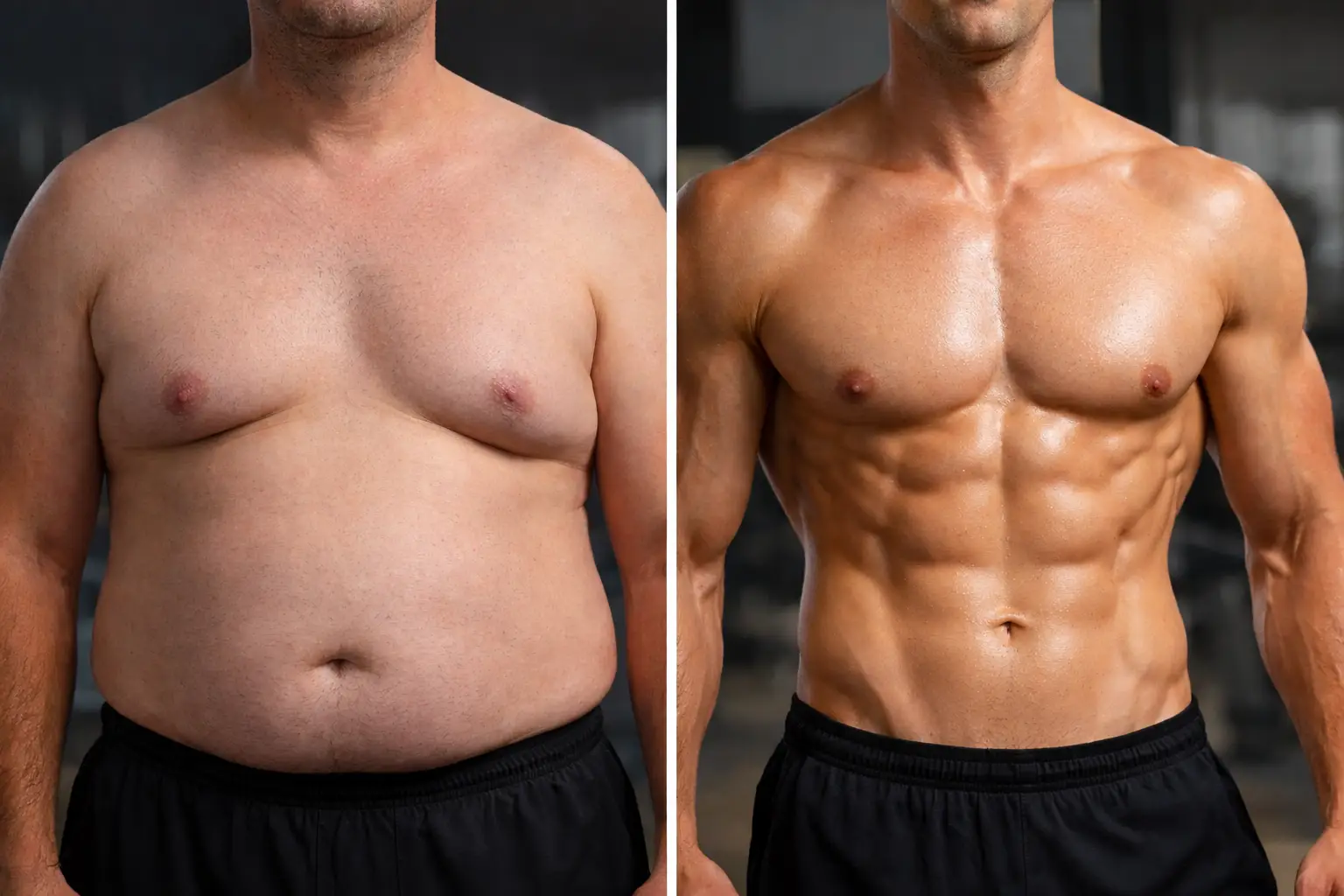

Genetics influence body composition, including how much muscle you naturally carry, where your body stores fat, and how your body regulates weight. But your genes don't lock you into one body type. Exercise, nutrition, age, and daily habits also affect your fat and muscle mass.
You may have noticed this when comparing yourself with family members. Perhaps you inherited your father’s broad shoulders or your mother’s tendency to carry more fat around the hips. Those similarities can tell you something about your genetic makeup, but they don’t tell the whole story of what your body can achieve.
Understanding the difference between inherited traits and changeable body composition can help you set realistic fitness goals and recognize progress that isn’t always visible on the scale.
How Are Genetics and Body Composition Connected?
Body composition refers to the different components that make up your total body weight, including fat, muscle, bones, organs, and water. Your body composition can tell you more about your physical makeup than weight alone.
When discussing fitness and body composition, two measurements are especially useful:
Body fat mass: The total amount of fat your body carries, including fat beneath your skin and fat stored deeper around your organs.
Skeletal muscle mass: The mass of the muscles attached to your skeleton, which help you move, lift objects, and perform physical activities.
Genetics contribute to both, but they aren’t the only factor. According to the National Library of Medicine, traits and conditions associated with body weight often have complex genetic causes. Multiple genes interact with environmental factors, including diet and physical activity.
For example, someone may inherit a tendency to gain weight more easily than other family members. Their body composition can still change depending on their eating habits, activity level, and other influences.
Is Body Type Genetic? What Your DNA Can Influence
Yes, body type is partly genetic. Your DNA helps shape your height, fat distribution, and lean body mass. Still, some parts of your physique are more malleable than others.
Your Body Frame and Natural Proportions
Have you noticed that some people have naturally wider shoulders, narrower hips, or longer limbs?
These differences are partly related to inherited skeletal structure. Your height, bone proportions, and joint structure contribute to your overall frame.
You cannot significantly change your adult bone structure through exercise. You can, though, change the muscle and fat carried on that frame.
For instance, someone with naturally narrow shoulders may develop larger shoulder muscles through resistance training. Their bones won’t become wider, but the added muscle can change their overall appearance.
Where Your Body Stores Fat
Some people tend to gain fat around their abdomen first. Others notice changes in their thighs, hips, or upper arms.
Research suggests these patterns are influenced by genetics. A 2022 study examining MRI measurements and genetic data from nearly 39,000 UK Biobank participants identified genetic variants associated with fat distribution. The researchers studied fat stored around internal organs, beneath abdominal skin, and around the hips and thighs.
This distinction matters because where you store fat can affect your health differently from how much fat you carry overall. As Mayo Clinic explains, fat that builds up deep in the abdomen, known as visceral fat, surrounds internal organs and is linked to a higher risk of conditions such as heart disease and type 2 diabetes. Fat stored just beneath the skin doesn’t carry the same risk profile. That’s why two people with similar body fat percentages may face different health risks, depending on where they store fat.
A separate 2025 study published in Nature Communications found that the genetic influences on adiposity and fat distribution are not identical. In other words, the genes associated with having more body fat are not necessarily the same ones associated with storing it around your waist.
Consider two people with similar body fat percentages. One may carry more fat around the abdomen, and the other may store more around the hips. Their bodies may look different even though their total fat percentages are nearly identical.
Genetics can help explain the difference. Hormones, age, and lifestyle can also affect fat storage.
How Much Muscle You Naturally Carry
Genetics also influences lean body mass, which includes muscle, body water, bones, and other non-fat tissues.
In a 2025 study published in Genome Biology, researchers analyzed whole-genome sequencing data from more than 10,000 participants. They identified several genetic variants associated with lean body mass, adding to evidence that inherited differences contribute to muscle-related traits.
This may help explain why two people of similar height and age can have different amounts of muscle, even before starting a structured exercise program.
But natural muscle mass doesn’t tell you how much muscle you can develop.
Resistance training places demands on your muscles, encouraging them to adapt over time. Someone starting with less muscle may make substantial progress through regular training, good nutrition, and sufficient recovery.
The distinction between muscle and fat matters here. They are different tissues, and changes in each can affect your shape without producing a large change in total weight.
Your Tendency to Gain or Lose Weight
Genetics can influence weight regulation through several biological processes, including appetite, energy expenditure, and fat storage.
That may help explain why maintaining a certain weight seems easier for some people than others. Still, it would be inaccurate to assume that someone who struggles to lose weight simply has a slow metabolism. Body size, muscle mass, physical activity, age, and health conditions can all influence energy needs.
Inherited differences may affect the conditions you’re working with, but they cannot predict your weight or body composition on their own.
Does Your Genetic Body Type Determine Your Fitness Results?
You may have heard people describe themselves as ectomorphs, mesomorphs, or endomorphs. These traditional body type categories describe general physical builds:
Ectomorph: Typically describes a slimmer build with a narrower frame.
Mesomorph: Often refers to a naturally muscular or broader build.
Endomorph: Generally describes a rounder build with more body fat.
These labels can describe appearances, but they don’t represent three fixed genetic categories. They also cannot reliably tell you how someone will respond to a particular workout or diet.
A person who looks slim today may develop considerable muscle through strength training. Someone with a rounder build may reduce body fat without changing their underlying skeletal proportions.
It also helps to understand what scientists mean when they say a physical trait is heritable. According to the National Library of Medicine’s explanation of heritability, a heritability estimate describes how genetic differences contribute to variation across a population. It does not tell you what percentage of your personal body weight or body shape is determined by your DNA.
So, if a study reports that a trait has high heritability, that does not mean the trait is impossible to change.
What Can You Change About Your Body Composition?
Genetics cannot be changed, but several components of body composition can. Which changes are most relevant depends on the starting point and the goal, such as gaining strength or reducing excess body fat.
Build or Maintain Skeletal Muscle Mass
Resistance training is one of the most direct ways to improve muscle mass and strength.
Exercises such as squats, rows, presses, and other movements that challenge your muscles can encourage adaptations as you gradually increase the training demands.
Research supports the benefits of resistance exercise even during weight loss. A 2025 systematic review and meta-analysis found that adding resistance training to dietary weight-loss programs reduced the loss of fat-free mass and increased fat loss in adults with overweight or obesity compared with diet-only programs, with lower-certainty evidence for improved strength.
Resistance training programs commonly involve working the major muscle groups regularly, gradually increasing resistance or repetitions as strength develops, eating enough protein to support muscle maintenance and recovery, and allowing recovery time between demanding workouts.
Results can differ between people following similar programs, so changes in strength and muscle measurements are most informative when compared with a person’s own starting point.
Reduce Body Fat Through Sustainable Habits
Your genetic background may influence where you store fat, but reducing your overall body fat can still change your body composition.
If fat loss is appropriate for your health goals, a manageable calorie deficit can help. This means consuming less energy than your body uses over time, without relying on extreme restrictions.
Regular physical activity can also support fat loss and overall health.
The CDC recommends at least 150 minutes of moderate activity each week, plus muscle-strengthening activities on two days.
Brisk walking for 30 minutes on five days, combined with two resistance-training sessions, would meet those recommendations.
One thing to keep in mind: you cannot reliably choose exactly where your body loses fat first. Doing ab exercises, for example, may strengthen your core, but it won’t specifically burn belly fat. A 2022 systematic review and meta-analysis found that training a particular body area did not lead to greater fat loss in that area. So, even if you tend to store fat around your abdomen, you may notice changes elsewhere before your waist gets smaller.
Adjust Your Approach as Your Body Changes
A fitness plan does not have to stay the same forever.
When strength improves without the expected muscle development, training consistency, food intake, and recovery are common factors. When fat loss slows, longer-term activity and nutrition patterns are generally more informative than a single weigh-in.
Your needs may also change with age, illness, medication use, or shifts in activity level. In some cases, guidance from a healthcare professional or registered dietitian can help you identify factors beyond exercise and nutrition.
How to Measure Changes in Your Body Composition
Genetics can help explain why people have different starting points, but it cannot tell you exactly how your body is changing today. That’s where measuring body composition becomes useful.
A bathroom scale shows your total weight. It cannot distinguish a change in fat mass from a change in muscle mass. BMI has a similar limitation because it uses height and weight rather than directly measuring body tissues.
Consider someone who starts a strength-training program weighing 175 pounds. After several weeks, their weight drops to 174 pounds.
That one-pound difference may not seem meaningful. But suppose their body composition measurements suggest they’ve lost four pounds of fat and gained three pounds of muscle.
The scale barely moved, but their body composition results tell a different story. They suggest a loss of body fat alongside an increase in muscle.
What Can an InBody Test Tell You?
InBody devices use bioelectrical impedance analysis (BIA) to measure electrical impedance across different parts of the body. These measurements are then used to calculate body composition values, including body fat mass and skeletal muscle mass.
Depending on the model, results can include:
Body fat mass: Helps you monitor changes in calculated total body fat.
Percent body fat: Shows the calculated percentage of your total body weight that comes from fat.
Skeletal muscle mass: Allows you to monitor changes in your calculated muscle mass over time.
Segmental lean analysis: Provides information about lean tissue in different body regions.
Body composition history: Allows you to compare measurements from different testing sessions when available.
Understanding your InBody result sheet can help you interpret these numbers in relation to your goals.
InBody measures electrical impedance directly and uses that information to calculate body composition values. These results aren’t direct measurements of fat or muscle tissue, however. A 2026 systematic review found that results from several BIA devices did not consistently agree with a four-compartment reference model when assessing individuals. This is one reason to interpret small changes carefully rather than relying on a single test.
Testing conditions also matter. Hydration, recent exercise, food intake, and differences between devices can influence results.
Comparisons are more meaningful when tests use the same device under similar conditions, ideally at a consistent time of day with similar hydration and meal timing. Patterns across multiple tests are more informative than any single small change, which may not reflect an actual gain or loss of tissue.
Body composition testing cannot reveal your genes or predict your genetic potential. What it can do is help you monitor how your fat and lean mass estimates change over time.
Should You Take a DNA Test to Understand Your Body Type?
Consumer DNA tests may provide information about genetic variants associated with certain physical traits. Some also offer reports about metabolism, weight tendencies, or exercise-related characteristics.
But identifying a genetic association is not the same as knowing how your body will respond to a particular diet or workout.
Body composition is influenced by many genes and non-genetic factors. A DNA report cannot give you a complete picture of your future muscle mass, ideal weight, or fat distribution.
A genetic test is not required to begin improving fitness.
Tracking changes in body composition, strength, and everyday habits provides more direct information about how your current plan is working.
For concerns about inherited medical conditions or unusual weight changes, a healthcare professional can help determine whether a medical evaluation or genetic counseling is appropriate.
The Bottom Line
Genetics helps shape natural body structure and influences how the body stores fat and develops muscle. It explains some of the differences between people, but it does not determine body composition on its own.
Changes in a person’s own muscle mass, body fat, and physical performance over time can show progress that genetics alone cannot predict.
Frequently Asked Questions About Genetics and Body Composition
Is Body Type Genetic or Determined by Lifestyle?
Both genetics and lifestyle influence body type. Your inherited skeletal structure contributes to your natural proportions, but exercise, nutrition, age, and other factors affect how much fat and muscle you carry.
Is Belly Fat Genetic?
Genetics can influence a person’s tendency to store fat around the abdomen. Hormones, age, overall body fat, and lifestyle also play a role, so abdominal fat is not determined by genes alone.
Can You Build Muscle With Less Favorable Genetics?
Yes. Genetic differences may influence your starting muscle mass and how you respond to training, but regular resistance exercise can still help you improve muscle mass and strength.
Can Genetics Make It Harder to Lose Body Fat?
Genes can affect how hungry you feel, when you feel full, and how your body uses energy. According to the CDC, these genetic differences can influence a person’s risk of gaining excess weight. But genetics is only part of the story. Nutrition, physical activity, medications, and health conditions also affect weight management, and body fat can still change over time.
Can a DNA Test Tell You Your Ideal Body Type?
A DNA test may identify variants associated with body-related traits, but it cannot determine one ideal body type for you. Your health, fitness goals, physical performance, and body composition measurements provide more useful context when deciding what to work toward.
References
Agrawal, S. et al. (2022) ‘Inherited basis of visceral, abdominal subcutaneous and gluteofemoral fat depots’, Nature Communications, 13, article 3771. Available at: https://doi.org/10.1038/s41467-022-30931-2
Arehart, C.H. et al. (2025) ‘Modeling the genomic architecture of adiposity and anthropometrics across the lifespan’, Nature Communications, 16, article 7494. Available at: https://doi.org/10.1038/s41467-025-62730-w
Binmahfoz, A. et al. (2025) ‘Effect of resistance exercise on body composition, muscle strength and cardiometabolic health during dietary weight loss in people living with overweight or obesity: a systematic review and meta-analysis’, BMJ Open Sport & Exercise Medicine, 11(3), article e002363. Available at: https://doi.org/10.1136/bmjsem-2024-002363
Centers for Disease Control and Prevention (2025a) Adding physical activity as an adult. Available at: https://www.cdc.gov/physical-activity-basics/adding-adults/ (Accessed: 11 November 2026).
Centers for Disease Control and Prevention (2025b) Risk factors for obesity. Available at: https://www.cdc.gov/obesity/risk-factors/risk-factors.html (Accessed: 11 November 2026).
InBody USA (no date) InBody technology. Available at: https://inbodyusa.com/general/technology/ (Accessed: 11 November 2026).
Mayo Clinic Staff (2026) Belly fat in men: Why weight loss matters. Mayo Clinic. Available at: https://www.mayoclinic.org/healthy-lifestyle/mens-health/in-depth/belly-fat/art-20045685 (Accessed: 11 November 2026).
National Institute of Diabetes and Digestive and Kidney Diseases (2023) Factors affecting weight & health. Available at: https://www.niddk.nih.gov/health-information/weight-management/adult-overweight-obesity/factors-affecting-weight-health (Accessed: 11 November 2026).
National Library of Medicine (2021a) What are complex or multifactorial disorders? MedlinePlus Genetics. Available at: https://medlineplus.gov/genetics/understanding/mutationsanddisorders/complexdisorders/ (Accessed: 11 November 2026).
National Library of Medicine (2021b) What is heritability? MedlinePlus Genetics. Available at: https://medlineplus.gov/genetics/understanding/inheritance/heritability/ (Accessed: 11 November 2026).
National Library of Medicine (2022) Is height determined by genetics? MedlinePlus Genetics. Available at: https://medlineplus.gov/genetics/understanding/traits/height/ (Accessed: 11 November 2026).
Oliver, C.J. et al. (2026) ‘The validity of bioelectrical impedance analysis compared to a four-compartment model in healthy adults: a systematic review’, Journal of Functional Morphology and Kinesiology, 11(1), article 65. Available at: https://doi.org/10.3390/jfmk11010065
Ramirez-Campillo, R. et al. (2022) ‘A proposed model to test the hypothesis of exercise-induced localized fat reduction (spot reduction), including a systematic review with meta-analysis’, Human Movement, 23(3), pp. 1–14. Available at: https://doi.org/10.5114/hm.2022.110373
Zhang, X. et al. (2025) ‘Multi-ancestry whole genome sequencing analysis of lean body mass’, Genome Biology, 26, article 106. Available at: https://doi.org/10.1186/s13059-025-03520-x