Age

Join our mailing list. We never spam.

Age

Join our mailing list. We never spam.

Age

Join our mailing list. We never spam.

All articles tagged

"

Age

"

Health

Feb 2, 2026

What Is Metabolic Age and How Does It Affect Your Health?

Your metabolic age is an important indicator of how well your body is functioning compared to your actual age. While your chronological age marks the passage of time, your metabolic age reflects how efficiently your metabolism is functioning.

It’s influenced by factors like your diet, exercise, and overall health. In this article, we’ll explain what metabolic age is, how it’s calculated, and share simple tips to help you improve it for better health.

What is Metabolic Age?
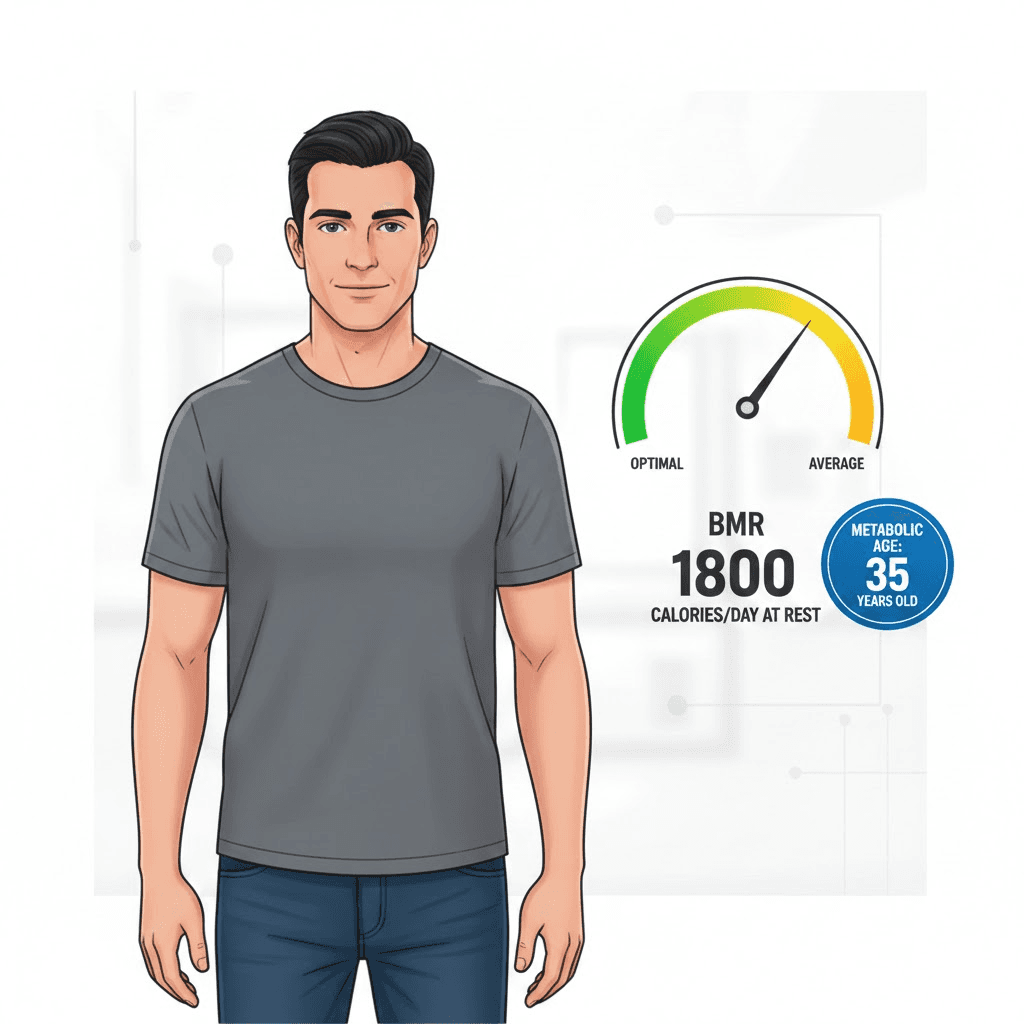
Infographic of male metabolic health data displaying 1800 BMR and 35-year-old metabolic age with a needle gauge indicating average health status.

Metabolic age is a comparison between your basal metabolic rate (BMR) and the average BMR of people in your chronological age group. In simpler terms, it tells you whether your metabolism is performing like that of someone younger, older, or right around your actual age.

Your basal metabolic rate represents the number of calories your body needs to perform basic life-sustaining functions while at rest (e.g., breathing, circulating blood, producing cells, and maintaining body temperature). It's essentially your body's baseline energy expenditure, accounting for roughly 60-75% of your total daily calorie burn.

When health professionals or body composition scales calculate your metabolic age, they're measuring your BMR and comparing it against population data. If your BMR is higher than average for your age group, you'll have a lower metabolic age. If it's lower than average, your metabolic age will be higher than your chronological age.

Here's a practical example: 

Let's say you're 45 years old, but your BMR matches the average BMR of a typical 35-year-old. Your metabolic age would be 35. Conversely, if your BMR matches that of a 55-year-old, your metabolic age would reflect that higher number.

The concept emerged from research into body composition and metabolic health, particularly as scientists recognized that chronological age alone doesn't tell the full story of someone's health status. Two people born on the same day can have vastly different metabolic profiles based on their lifestyle choices, genetics, and overall health.

It's worth noting that metabolic age isn't a standardized medical diagnostic tool in the way blood pressure or cholesterol levels are. Different devices and calculations may produce slightly different results because there's no universal formula or database. But, the underlying principle remains consistent: comparing your metabolism to population averages gives you a snapshot of your metabolic health relative to your peers.

What Metabolic Age Really Means for Your Health?

Your metabolic age can be a helpful reference point for understanding metabolic health trends, but it should be interpreted alongside other health markers.

  • Research suggests metabolic health is associated with longevity and lower risk of chronic conditions.

  • When your metabolic age is lower than your chronological age, it generally suggests several positive health markers. You likely have more lean muscle mass and less body fat, particularly visceral fat. Higher muscle mass increases your BMR because muscle tissue is metabolically active, meaning it burns calories even when you're sitting on the couch.

  • A younger metabolic age also typically indicates better insulin sensitivity, which means your body efficiently processes glucose and maintains stable blood sugar levels. This is often associated with better blood sugar control and cardiometabolic markers. Studies have shown that people with better metabolic health tend to have lower inflammation markers, healthier cholesterol profiles, and better blood pressure readings.

  • On the flip side, if your metabolic age is higher than your chronological age, it may reflect patterns such as higher body fat, lower muscle mass, or both. Research has linked a higher metabolic age to greater cardiometabolic risk, including higher risk of cardiovascular disease and future cardiovascular events. This is not a diagnosis, but it can be a useful signal to review lifestyle factors like activity, nutrition, sleep, and stress.

Metabolic Age vs. Chronological Age: What's the Difference?

Chronological age is the number of years since you were born. Metabolic age, by contrast, is dynamic and changeable.

You might be chronologically 50 but metabolically 40 if you've maintained excellent fitness, preserved muscle mass, and kept your body fat in check. Alternatively, a sedentary 30-year-old with poor dietary habits might have the metabolism of someone in their 40s or 50s.

The gap between these two ages reveals something critical: biological aging doesn't proceed at the same rate for everyone.  

One significant advantage of focusing on metabolic age rather than chronological age is that it shifts attention to factors you can control. You can't change when you were born, but you absolutely can influence your metabolic health through daily choices. This perspective empowers you to take ownership of your health trajectory.

Aspect

Chronological Age

Metabolic Age

Definition

The number of years since you were born.

A measure of how efficiently your body is functioning based on metabolism.

Changeability

Fixed and unchangeable.

Dynamic and can change based on lifestyle, fitness, and health choices.

Influencing Factors

Cannot be influenced.

Can be influenced by diet, exercise, muscle mass, and body fat.

How is Metabolic Age Calculated?

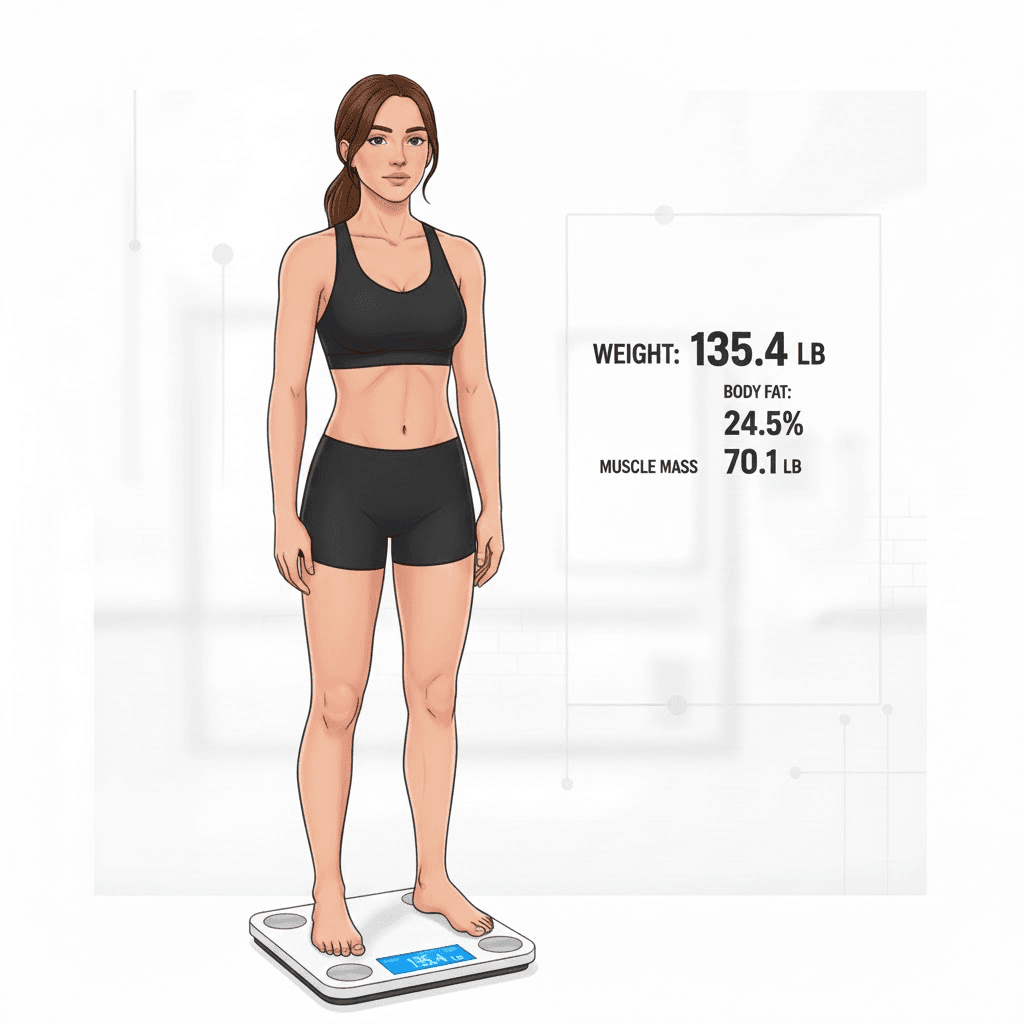
Infographic showing body composition analysis for a woman, including weight tracking, body fat percentage, and muscle mass measurements on a smart scale.

The calculation of metabolic age involves several steps and requires specific body composition data. While the exact algorithms vary between devices and calculation methods, the fundamental process follows a similar pattern.

Step 1: Determining Basal Metabolic Rate (BMR)

First, your basal metabolic rate (BMR) needs to be determined. BMR is the number of calories your body needs at rest to perform basic functions like breathing and maintaining body temperature.

There are several ways to measure or estimate BMR. The gold standard is indirect calorimetry, which measures oxygen consumption and carbon dioxide production to precisely calculate energy expenditure. However, this method requires specialized equipment and is typically only available in research or clinical settings.

Step 2: Using Bioelectrical Impedance Analysis (BIA)

More commonly, bioelectrical impedance analysis (BIA) devices estimate your body composition by sending a weak electrical current through your body. Since muscle and fat conduct electricity differently, the device can estimate your percentages of muscle mass, body fat, bone density, and water content. Many modern smart scales and body composition analyzers, such as InBody devices, use this technology to provide BIA-based estimates.

Step 3: Calculating BMR Using Mathematical Formulas

Once your body composition is known, mathematical formulas calculate your BMR. Several equations exist for this purpose, including the Harris-Benedict equation, the Mifflin-St Jeor equation, and the Katch-McArdle formula. These formulas consider variables like weight, height, age, sex, and lean body mass.

For example, the revised Harris-Benedict equation calculates BMR as:

  • For men:
    BMR = 88.362 + (13.397 × weight in kg) + (4.799 × height in cm) - (5.677 × age in years)

  • For women:
    BMR = 447.593 + (9.247 × weight in kg) + (3.098 × height in cm) - (4.330 × age in years)

The Katch-McArdle formula, which incorporates lean body mass, often provides more accurate results:

  • BMR = 370 + (21.6 × lean body mass in kg)

Step 4: Comparing BMR with Age Group Databases

Once your BMR is calculated, it’s compared against a database of average BMR values for different age groups. This database typically includes BMR data collected from thousands or millions of people across various ages. The comparison reveals where your metabolism falls on the spectrum.

If your BMR equals the average BMR for 35-year-olds, your metabolic age is 35, regardless of whether you’re actually 25, 35, or 45. The device or software essentially asks: “What age group does this person’s metabolism most closely resemble?”

It’s important to understand that different manufacturers may use different reference databases and proprietary algorithms.  

Also, some limitations exist with metabolic age calculations. They don't account for factors like hormonal variations, certain medical conditions, medications, or genetic variations that affect metabolism. Two people with identical body compositions might still have different actual metabolic rates due to thyroid function, mitochondrial efficiency, or other physiological differences that the calculation doesn't capture.

How to Improve Your Metabolic Age?

Fitness and wellness lifestyle graphic depicting strength training, healthy meal preparation, and the importance of sleep for recovery.

If your metabolic age is higher than you'd like, the good news is that you have significant power to improve it. The strategies that lower metabolic age are the same ones that improve overall health:

Build and Preserve Muscle Mass

Increasing your lean muscle mass is perhaps the most effective way to lower your metabolic age. Muscle tissue burns significantly more calories at rest than fat tissue does. Estimates of tissue-specific resting metabolic rates suggest skeletal muscle uses about 13 kcal per kg per day compared with about 4.5 kcal per kg per day for adipose tissue, which is roughly 6 versus 2 kcal per pound per day. Individual metabolic rate still depends on many factors, including total lean mass and organ activity.

Resistance training can play a major role in preserving muscle and supporting metabolic health. Aim for at least two to three strength training sessions per week, targeting all major muscle groups.  

As you age, you naturally lose muscle mass in a process called sarcopenia, which can start as early as your 30s and accelerate after 50. Counteracting this requires consistent effort, but the metabolic payoff is substantial. Progressive overload, gradually increasing the weight, reps, or difficulty of your exercises, ensures continued muscle growth.

Optimize Your Nutrition

What you eat profoundly affects your body composition and metabolic health. Prioritize protein intake, as protein supports muscle maintenance and growth. The Recommended Dietary Allowance for protein is 0.8 grams per kilogram of body weight, which is about 0.36 grams per pound. Some people may benefit from higher intakes depending on activity level and goals, but individual needs vary.

Avoid excessive calorie restriction, which can actually slow your metabolism. Severe dieting triggers adaptive thermogenesis, where your body becomes more efficient (burns fewer calories) to conserve energy. Instead, if weight loss is a goal, focus on moderate and sustainable changes in energy intake that you can maintain over time.

Focus on whole, minimally processed foods that provide nutrients without excess calories from added sugars and unhealthy fats. Adequate protein, healthy fats, and complex carbohydrates provide the building blocks your body needs for optimal metabolic function.

Don't skip meals or go extremely low-calorie for extended periods. Consistent, adequate nutrition supports metabolic health better than dramatic restriction followed by overeating.

Incorporate Cardiovascular Exercise

While cardio doesn't build muscle like resistance training does, it supports overall metabolic health, improves insulin sensitivity, and helps with fat loss. High-intensity interval training (HIIT) appears particularly effective for metabolic benefits, alternating short bursts of intense effort with recovery periods.

Aim for at least 150 minutes of moderate-intensity aerobic activity or 75 minutes of vigorous activity per week, as recommended by the CDC. This supports cardiovascular health, helps maintain a healthy weight, and improves your body's ability to process nutrients efficiently.

Prioritize Quality Sleep

Sleep deprivation wreaks havoc on metabolism. Poor sleep disrupts hormones like leptin and ghrelin that regulate hunger, increases cortisol (which promotes fat storage), and reduces insulin sensitivity. Chronic sleep debt is associated with weight gain, increased body fat, and muscle loss.

Aim for 7-9 hours of quality sleep per night. Establish consistent sleep and wake times, create a dark and cool sleeping environment, and limit screen time before bed. Think of sleep as a non-negotiable pillar of metabolic health, not a luxury.

Manage Stress Effectively

Chronic stress elevates cortisol, which promotes abdominal fat accumulation and can break down muscle tissue. High cortisol also impairs insulin sensitivity and can increase appetite and cravings for high-calorie foods.

Incorporate stress management techniques that work for you, meditation, yoga, deep breathing exercises, time in nature, or engaging hobbies. The specific method matters less than finding sustainable practices that genuinely reduce your stress levels.

Stay Hydrated and Limit Alcohol

Proper hydration supports all metabolic processes. Even mild dehydration can reduce metabolic rate slightly. Water also helps with appetite regulation and supports exercise performance.

Alcohol, meanwhile, can interfere with muscle protein synthesis, adds empty calories, and can disrupt sleep and recovery. Moderation or elimination of alcohol often leads to improvements in body composition and metabolic markers.

Be Patient and Consistent

Improving metabolic age doesn't happen overnight. Significant changes in body composition typically take weeks to months of consistent effort. Focus on building sustainable habits rather than seeking quick fixes. Small, consistent improvements compound over time into dramatic transformations.

Track your progress not just through metabolic age measurements but also through how you feel, your energy levels, exercise performance, and how your clothes fit. These subjective markers often improve before the numbers change significantly.

Key Takeaways

  • Metabolic age compares your basal metabolic rate (BMR) to the average BMR of people in your chronological age group, showing whether your metabolism functions like someone younger or older.

  • Understanding what metabolic age means can help you interpret trends related to body composition and metabolic health.

  • Building and preserving muscle mass through resistance training is the most effective way to lower your metabolic age, as muscle burns significantly more calories at rest than fat.

  • Your metabolic age is dynamic and responsive to lifestyle changes like nutrition, exercise, sleep quality, and stress management, unlike your fixed chronological age.

  • A metabolic age higher than your actual age serves as a warning sign for potential health issues, while a lower metabolic age typically indicates favorable body composition and better metabolic health.

  • Consistency in healthy habits matters more than quick fixes when improving metabolic age, as significant changes in body composition and metabolic function take weeks to months of sustained effort.

Frequently Asked Questions

What does metabolic age mean?

Metabolic age compares your basal metabolic rate (BMR) to the average BMR of people in your chronological age group. It indicates whether your metabolism functions like someone younger, older, or the same as your actual age based on body composition and energy expenditure.

How can I lower my metabolic age?

You can lower your metabolic age by building muscle through resistance training, eating adequate protein, incorporating cardio exercise, getting 7-9 hours of quality sleep, managing stress effectively, and maintaining a healthy body composition with less body fat and more lean muscle mass.

What is the difference between metabolic age and chronological age?

Chronological age is simply the number of years since you were born, which advances steadily and cannot be changed. Metabolic age is a functional measure of how efficiently your body burns energy, which can be improved or worsened based on lifestyle choices and health habits.

Is metabolic age an accurate indicator of health?

Metabolic age provides useful insight into metabolic health and body composition, but it's not a standardized medical diagnostic tool. Different devices may give varying results, and it should be considered alongside other health markers like blood pressure, cholesterol, and blood sugar levels.

Can you reverse your metabolic age?

Yes, metabolic age is changeable and responsive to lifestyle interventions. By increasing lean muscle mass, improving nutrition, exercising regularly, and adopting healthy sleep and stress management habits, you can effectively lower your metabolic age over time with consistent effort.

What causes a high metabolic age?

A high metabolic age typically results from excess body fat, insufficient muscle mass, sedentary lifestyle, poor nutrition, inadequate sleep, and chronic stress. These factors reduce your basal metabolic rate, making your metabolism function like someone older than your actual age.


A clock ticking

Health

Nov 30, 2018

How Time Works Against Your Body and What To Do About It

Editor’s Note: This post was updated on November 30, 2018, for accuracy and comprehensiveness. It was originally published on May 12, 2016.

Ask any financial advisor worth their salt about when you should invest for retirement and you’ll likely get the same response: it is crucial that you start as soon as you can, as much as you can.

Why? Because the sooner you invest for your future, the better your chances are of living a comfortable lifestyle in your old age. The sooner you start, the greater the chances you’ll have a healthy investment account that you can draw off later in life, which can allow you to do all the things you want in retirement.

The same applies to your health and your body composition.

If you’re in your 20s or 30s, it’s easy to completely disregard your fitness if you want to, just as it’s easy to forget about investing money for retirement. You look and feel healthy with little to no effort.

Time, it seems, is on your side. But you won’t be able to maintain your health if you keep living a unhealthy lifestyle.

As anyone reading this who is in their 40s or beyond will tell you: the time you’re living on is borrowed. You might feel invincible today, but time will catch up with you, and sooner than you think.

If you don’t start to develop and maintain a healthy body composition through exercise while you are young, you will be hit hard with the effects of old age. You will experience decreased strength, functional ability, and quality of life. You will be old and frail. But it’s not all doom and gloom. Read on to understand how aging affects your body, and learn exercises and workouts that will help preserve your body composition and strength and help you enjoy your golden years.  

Here’s How Aging Affects the Body

You may not realize it, but your muscles are constantly being broken down and repaired. When you use your muscles, microscopic tears are caused by daily wear and tear. This necessitates rebuilding those tears with protein.

Here’s the problem: as you get older, your body stops rebuilding your muscles as efficiently as it used to. Over time, this leads to a reduction in overall muscle mass and strength. That loss can be from a combination of factors including hormone changes (ex.the level of hormone testosterone gradually decreases), physical inactivity, and comorbid conditions (cardiovascular disease, diabetes, cancer).

Now the kicker: this reduction in muscle mass doesn’t just occur in the elderly – unless you consider your 30s old. That’s right. Research has shown that strength and development peaks in the 20s and begins to plateau in your 30s.

For many people, decreased strength (whether consciously or not) translates to being less active, and previously routine activities become more difficult. Less activity means fewer calories burned, less muscle development, and over time, negative changes to your body composition – mainly muscle loss and an increase in percent body fat.

If left unchecked, at some point in your 30s, your body will start to progressively lose muscle year after year, and by the time you’re 50, you could have lost around 10% of your muscle area. Thereafter, you can lose an additional 15% of the remainder by the time you’re 60 and another 15% of that by 70. Eventually, you will be old and frail and unable to enjoy life to the fullest.  

Granted you won’t suddenly get all the symptoms of aging overnight. But over time you will begin to notice the effects of old age. Here are three things to watch out for.   

  1. Moving will become harder

Right now, you’re probably taking your mobility for granted.  You can run, walk up a flight of stairs, throw a ball, and maybe even ride a bike.  All of these things seem easy now.

But when you start losing muscle, these simple actions can become difficult. All of the sudden, taking the elevator becomes a necessity, not a luxury. You get tired more easily. Even getting in and out of a car can become a challenge.  These are all possible experiences you may have as a result of losing muscle, as loss of function and independence is a pretty common consequence of muscle loss as you age.

  1. Gaining fat becomes easy

Remember how your muscles were like your body’s engine and put a large demand on your body for calories to power them? In your youth, you didnt have to worry about a healthy diet. It felt like you could eat as many calories you wanted without putting on a pound.  Well, the reality is that your muscles are linked with your metabolism, so as soon your muscles start to diminish, so does your metabolism.

When this happens, many people describe it as their “metabolism slowing down.” That’s only partially true; the majority of what’s actually happening is muscle loss, which means your body needs fewer calories to operate.

If your body needs fewer calories but you continue to eat the same number of calories as you did before, you’ll start gaining body fat.  What’s more: this entire process can occur with no drastic changes to your weight.

As muscle loss progresses and is replaced by fat (two separate processes, mind you), your body weight can remain largely unchanged – masking significant changes in body composition and potentially leading to a wide array of health problems associated with obesity.

  1. Health problems will begin to appear

Human beings tend to gain weight throughout middle age due to a combination of many different factors, including becoming less active.  Increased body fat has been linked with many different health problems.

One of the most frequently cited health risks is diabetes.  Studies have shown that steady weight gain throughout life can lead to adult onset diabetes.  This is due in part to not only more body fat but also muscle loss. Loss of skeletal muscle mass has been linked with insulin resistance: the less muscle you have, the less insulin sensitive you become – as your insulin sensitivity decreases and you become more resistant, your risk factor for type II diabetes increases (to review: insulin sensitivity is good, while insulin resistance is bad for your health).   

But don’t forget, the loss of muscle can cause other problems as you age.  A particularly damaging condition, especially for women, is the onset of osteoporosis. Osteoporosis occurs when more old bone is reabsorbed than new bone is created. A number of published studies in both men and women have linked decreased muscle mass with thinner, weaker bones, increasing the risk of osteoporosis and risk of serious injury from falls.

Muscle: Your Fountain of Youth

Muscle is an incredibly important tissue that is a crucial part of your body’s health.  Having a well-developed body with enough muscle mass isn’t just for looking good – it’s for promoting a healthy body and living a full life for as long as possible.

A helpful way to understand this is to think of body’s muscles as your body’s internal “savings.” As you work out and your body converts the protein from your diet into muscle protein, you create muscle “deposits,” similar to depositing money in a savings account.

Just as a bigger bank account can help you do the things you want to do in life financially, bigger muscles help you do the things you want to do physically.  And just like when hard financial times come – like when you lose a job unexpectedly – a healthy savings account can help you keep your head above water, when your body has a crisis – like becoming seriously ill or injured – your body draws on your muscles for protein reserves. The bigger the reserves, the easier it is to recover from a crisis, physical or financial.

If you don’t currently exercise and still feel great, you can likely thank your youth for that.  However, this free pass at health won’t last forever. If you’re still young, you need to preserve your advantage for as long as you can so when you start to lose muscle due to aging, you don’t become frail and weak.

Get a Leg Up On Muscle Loss

From your 30s onward, this is a crucial time to invest in your health. The time you spend to develop and preserve muscle mass now will pay dividends down the road.   

Fortunately, although your body may eventually start losing muscle mass at a faster rate because of your advancing age, your body doesn’t lose its ability to gain it. It doesn’t matter whether you’re 23 or 84; resistance training (weight lifting or other workouts that challenges muscle) has a positive effect on building mass.

Some of the best exercises you can do to preserve muscle in all parts of your body that are both effective and time-efficient are the Olympic-style lifts: deadlifts, squats, bench press, and overhead press.  These exercises, while initially challenging, are great for people short on time because they target many different groups at once, and if performed correctly, can lead to the development of muscle across your whole body.

Even better news: people who are just getting started with these types of exercises can experience rapid gains in a relatively short time with little or no plateau.  For instance, a group of women who began exercising by performing squats in a controlled study experienced more than a pound of muscle gain in 4 weeks by squatting just twice a week. That’s just 8 sessions.

Squatting, in particular, is a good exercise to invest in because it targets the largest muscle group in your body – your legs – which make up around 40% of your overall skeletal muscle mass.  Increasing your muscle mass in your legs is a great way to increase your metabolism, burn extra calories when you aren’t working out (known as the EPOC effect), and fend off unwanted fat gain.

Make an Investment In Yourself

It’s really easy to think of yourself as healthy and invincible when you’re young, but make no mistake: age will catch up with you, just as it catches up with everyone.

Remember: your muscles will start to plateau in strength sometime in your 30s, potentially leading to you becoming less active. It’s likely you won’t notice a thing early on unless you’re already keeping fit and/or tracking your weight and body composition.

Being aware of your body fat percentage and tracking it over time is a good way to determine if your body composition is declining.  If you’ve noticed that your weight hasn’t changed much over the last couple of years but your body fat percentage has increased, that’s a red flag indicating aging-related muscle loss is occurring.

Invest in your muscles while you are young and one day they will take care of you!

Man pushing weighted sled on gym turf

Fitness

Nov 16, 2018

Strength Training Has No Age Limit

Editor’s Note: This post was updated on November 15, 2018, for accuracy and comprehensiveness. It was originally published on August 31st, 2016.

As we age we lose muscle mass. There is even a fancy scientific word for it: sarcopenia. It means the loss of muscle mass due to aging.

Between the ages of 30 and 80, both men and women can lose anywhere from 30%-50% of their muscle strength. Decreasing strength can make it a challenge to lead an active lifestyle or find the energy level to complete the daily errands, much less exercise. Inactivity can make muscle loss even worse.

Despite the consequences of muscle mass loss, older individuals are still reluctant to try to improve their fitness level through resistance workouts. There’s false belief that after years of inactivity, they are too old to pick up a dumbbell. But with the right mindset, anyone can set goals to improve your body composition that’ll improve your energy level and keep you active long into your golden years.

That change in mindset starts with gaining a better understanding of two major categories of fitness – physical fitness and functional fitness.

Physical Fitness vs Functional Fitness

If you’re from Generation X or older, you’re old enough to remember the now retired Presidential Physical Fitness Test (Now renamed the Presidential Youth Fitness Program.)

The yearly test held in grade schools across the nation involved a timed mile run, pull-ups, and other tests of strength, agility, endurance, and flexibility. Its goal was to improve the standard of physical fitness.

When you are younger, it’s easier to find a balance between obligations and time for yourself. But as you get older, family and work obligations grow and physical fitness starts to take a backseat to other priorities. If that sounds like you, that’s OK. Sure, achieving that perfect summer body may not be a priority anymore, but there is still an important fitness goal you work on for the rest of your life: functional fitness.

If you’ve never heard the term before, that’s not surprising. In fact, unless you’re over the age of sixty or seventy, it’s probably not even on your radar.  Functional fitness is about being able to perform everyday activities safely, like getting in and out of a seated position or grabbing the spices off the top shelf in your kitchen.

Sounds simple, right? Maybe it is for you now but consider this:

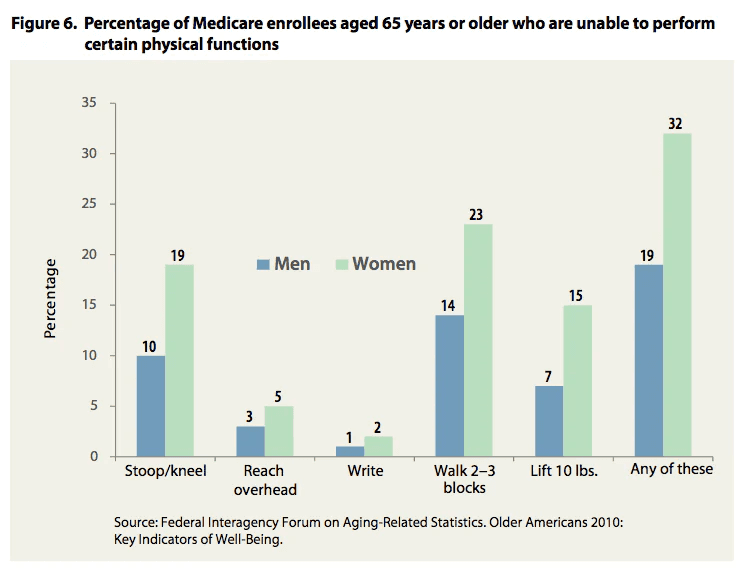
It turns out that 19% of women and 10% of men enrolled in Medicare-aged 65 years or older are unable to kneel. So what? You may have never thought of kneeling as a challenge, but that’s the type of motion that is useful when you need to pick up something that you’ve dropped on the floor. So if you don’t have the balance to kneel and pick something up, you’re in trouble.

It’s not just kneeling, either. Below is a graph showing, by percentages, other physical movements that Medicare enrollees aged 65 years or older cannot perform, such as walk two to three blocks or lift 10 pounds.

Source: CDC

Use it or lose it?

One way to maintain our ability to perform daily activities as we age is by strength training. But convincing men and women at any age to adopt an active lifestyle much less engage in some form of resistance training  can be a challenge.  But for older adults seeking motivation to become healthier and more mobile, make no mistake, as you age, if you don’t stay physically active through regular exercise your balance, energy level,  and mobility will decline.

Strength, balance and improved body composition

Functional fitness, the ability to move about comfortably in our daily lives, not only benefits you in terms of activity but also contributes to an improved body composition. In fact, working to reach a certain level of functional fitness and improving body composition go hand in hand.

The aging process has been shown to reduce our metabolic rate, which often leads to an increase in body fat. That’s largely due to the fact that people tend to lose Lean Body Mass as they age due to inactivity. Lean Body Mass contributes to your overall Basal Metabolic Rate (BMR), also known as your metabolism, which is the number of calories your body needs to support its essential functions.

By engaging in strength training or resistance exercises, older adults – as well as anyone at any age — can regain some of the muscle loss due to aging/inactivity, which in turn can lead to an increase in their lean body mass. That increase Lean Body Mass increases BMR, which helps stave off fat gain if diet remains consistent.

Why do we care about improving our body composition as we age? For  important reasons like preventing bone loss, heart disease, obesity, and age-related falling, to name a few. As we age and lose lean muscle mass, balance and agility often go with it. Our tendency to fall increases and the injuries sustained from those falls can be detrimental to our overall health and quality of life.

Fracture’s caused by falling is higher in elderly women than men. Despite the fact that women can greatly benefit from resistance training, the number of women who lift regularly is still low. Fortunately for women, joining the ranks of the bench press/deadlift brigade isn’t necessary for results to come. In an all-women study involving 20 women over the age of 50, the subjects spent 12 weeks using bands as the chosen form of resistance training (as opposed to dumbbells or seated machines) and saw increases in strength. Also worth noting, none of the participants reported injuries. That’s important information for those who are worried that exercise may be too strenuous for their body.

It’s never too late to start lifting

Frankly, the numbers are pretty bleak. A shockingly low 6% of adults in the United States engage in resistance training or any type of weight training at least twice a week, the minimum criteria set forth in the 2008 Physical Activity Guidelines for Americans (2008 Guidelines) and by the American College of Sports Medicine.

No doubt, misconceptions that weight training exercises have an age limit plays a large role. Part of the beauty of the benefits received from lifting weights, whether they be dumbbells, bodyweight exercises, bands, machines or otherwise, is that you don’t have to be young to reap the benefits.

You don’t have to train at a high-intensity. You don’t have to be a beacon of health. It seems odd that we still have to clarify this, but it’s important to reiterate that both men and women can benefit from lifting weights.

For older adults interested in increasing their energy levels and decreasing their body fat, look to resistance training. A study published in Sports Medicine on the effects of strength training on the elderly stated,

Resistance training in older adults also increases power, reduces the difficulty of performing daily tasks, enhances energy expenditure and body composition, and promotes participation in spontaneous physical activity.

In light of this information, take comfort in knowing that it’s never too late in life to start lifting.

Enjoying Your Golden Years 

Strength comes in many forms. And it comes from wisdom and experience, both gained over a lifetime. And today, we know that benefits from resistance exercises go beyond just physical appearance. Let’s consciously decide to look forward to our golden years and promise ourselves something as simple as supporting our own body weight won’t be a significant challenge. As a popular saying goes, “Working out is hard, but living life without muscles is harder.” Don’t believe that it’s too late after years of inactivity. Anyone can get on the cable machine and start lifting to improve their life because strength training has no age limit.  

***

Hilary Fosdal is an ACE certified personal trainer. She also does a lot of heavy lifting at redphonestudio.com, a web design and digital marketing company that helps health practitioners improve their professional identity.

Health

Feb 2, 2026

What Is Metabolic Age and How Does It Affect Your Health?

Your metabolic age is an important indicator of how well your body is functioning compared to your actual age. While your chronological age marks the passage of time, your metabolic age reflects how efficiently your metabolism is functioning.

It’s influenced by factors like your diet, exercise, and overall health. In this article, we’ll explain what metabolic age is, how it’s calculated, and share simple tips to help you improve it for better health.

What is Metabolic Age?

Infographic of male metabolic health data displaying 1800 BMR and 35-year-old metabolic age with a needle gauge indicating average health status.

Metabolic age is a comparison between your basal metabolic rate (BMR) and the average BMR of people in your chronological age group. In simpler terms, it tells you whether your metabolism is performing like that of someone younger, older, or right around your actual age.

Your basal metabolic rate represents the number of calories your body needs to perform basic life-sustaining functions while at rest (e.g., breathing, circulating blood, producing cells, and maintaining body temperature). It's essentially your body's baseline energy expenditure, accounting for roughly 60-75% of your total daily calorie burn.

When health professionals or body composition scales calculate your metabolic age, they're measuring your BMR and comparing it against population data. If your BMR is higher than average for your age group, you'll have a lower metabolic age. If it's lower than average, your metabolic age will be higher than your chronological age.

Here's a practical example: 

Let's say you're 45 years old, but your BMR matches the average BMR of a typical 35-year-old. Your metabolic age would be 35. Conversely, if your BMR matches that of a 55-year-old, your metabolic age would reflect that higher number.

The concept emerged from research into body composition and metabolic health, particularly as scientists recognized that chronological age alone doesn't tell the full story of someone's health status. Two people born on the same day can have vastly different metabolic profiles based on their lifestyle choices, genetics, and overall health.

It's worth noting that metabolic age isn't a standardized medical diagnostic tool in the way blood pressure or cholesterol levels are. Different devices and calculations may produce slightly different results because there's no universal formula or database. But, the underlying principle remains consistent: comparing your metabolism to population averages gives you a snapshot of your metabolic health relative to your peers.

What Metabolic Age Really Means for Your Health?

Your metabolic age can be a helpful reference point for understanding metabolic health trends, but it should be interpreted alongside other health markers.

  • Research suggests metabolic health is associated with longevity and lower risk of chronic conditions.

  • When your metabolic age is lower than your chronological age, it generally suggests several positive health markers. You likely have more lean muscle mass and less body fat, particularly visceral fat. Higher muscle mass increases your BMR because muscle tissue is metabolically active, meaning it burns calories even when you're sitting on the couch.

  • A younger metabolic age also typically indicates better insulin sensitivity, which means your body efficiently processes glucose and maintains stable blood sugar levels. This is often associated with better blood sugar control and cardiometabolic markers. Studies have shown that people with better metabolic health tend to have lower inflammation markers, healthier cholesterol profiles, and better blood pressure readings.

  • On the flip side, if your metabolic age is higher than your chronological age, it may reflect patterns such as higher body fat, lower muscle mass, or both. Research has linked a higher metabolic age to greater cardiometabolic risk, including higher risk of cardiovascular disease and future cardiovascular events. This is not a diagnosis, but it can be a useful signal to review lifestyle factors like activity, nutrition, sleep, and stress.

Metabolic Age vs. Chronological Age: What's the Difference?

Chronological age is the number of years since you were born. Metabolic age, by contrast, is dynamic and changeable.

You might be chronologically 50 but metabolically 40 if you've maintained excellent fitness, preserved muscle mass, and kept your body fat in check. Alternatively, a sedentary 30-year-old with poor dietary habits might have the metabolism of someone in their 40s or 50s.

The gap between these two ages reveals something critical: biological aging doesn't proceed at the same rate for everyone.  

One significant advantage of focusing on metabolic age rather than chronological age is that it shifts attention to factors you can control. You can't change when you were born, but you absolutely can influence your metabolic health through daily choices. This perspective empowers you to take ownership of your health trajectory.

Aspect

Chronological Age

Metabolic Age

Definition

The number of years since you were born.

A measure of how efficiently your body is functioning based on metabolism.

Changeability

Fixed and unchangeable.

Dynamic and can change based on lifestyle, fitness, and health choices.

Influencing Factors

Cannot be influenced.

Can be influenced by diet, exercise, muscle mass, and body fat.

How is Metabolic Age Calculated?

Infographic showing body composition analysis for a woman, including weight tracking, body fat percentage, and muscle mass measurements on a smart scale.

The calculation of metabolic age involves several steps and requires specific body composition data. While the exact algorithms vary between devices and calculation methods, the fundamental process follows a similar pattern.

Step 1: Determining Basal Metabolic Rate (BMR)

First, your basal metabolic rate (BMR) needs to be determined. BMR is the number of calories your body needs at rest to perform basic functions like breathing and maintaining body temperature.

There are several ways to measure or estimate BMR. The gold standard is indirect calorimetry, which measures oxygen consumption and carbon dioxide production to precisely calculate energy expenditure. However, this method requires specialized equipment and is typically only available in research or clinical settings.

Step 2: Using Bioelectrical Impedance Analysis (BIA)

More commonly, bioelectrical impedance analysis (BIA) devices estimate your body composition by sending a weak electrical current through your body. Since muscle and fat conduct electricity differently, the device can estimate your percentages of muscle mass, body fat, bone density, and water content. Many modern smart scales and body composition analyzers, such as InBody devices, use this technology to provide BIA-based estimates.

Step 3: Calculating BMR Using Mathematical Formulas

Once your body composition is known, mathematical formulas calculate your BMR. Several equations exist for this purpose, including the Harris-Benedict equation, the Mifflin-St Jeor equation, and the Katch-McArdle formula. These formulas consider variables like weight, height, age, sex, and lean body mass.

For example, the revised Harris-Benedict equation calculates BMR as:

  • For men:
    BMR = 88.362 + (13.397 × weight in kg) + (4.799 × height in cm) - (5.677 × age in years)

  • For women:
    BMR = 447.593 + (9.247 × weight in kg) + (3.098 × height in cm) - (4.330 × age in years)

The Katch-McArdle formula, which incorporates lean body mass, often provides more accurate results:

  • BMR = 370 + (21.6 × lean body mass in kg)

Step 4: Comparing BMR with Age Group Databases

Once your BMR is calculated, it’s compared against a database of average BMR values for different age groups. This database typically includes BMR data collected from thousands or millions of people across various ages. The comparison reveals where your metabolism falls on the spectrum.

If your BMR equals the average BMR for 35-year-olds, your metabolic age is 35, regardless of whether you’re actually 25, 35, or 45. The device or software essentially asks: “What age group does this person’s metabolism most closely resemble?”

It’s important to understand that different manufacturers may use different reference databases and proprietary algorithms.  

Also, some limitations exist with metabolic age calculations. They don't account for factors like hormonal variations, certain medical conditions, medications, or genetic variations that affect metabolism. Two people with identical body compositions might still have different actual metabolic rates due to thyroid function, mitochondrial efficiency, or other physiological differences that the calculation doesn't capture.

How to Improve Your Metabolic Age?

Fitness and wellness lifestyle graphic depicting strength training, healthy meal preparation, and the importance of sleep for recovery.

If your metabolic age is higher than you'd like, the good news is that you have significant power to improve it. The strategies that lower metabolic age are the same ones that improve overall health:

Build and Preserve Muscle Mass

Increasing your lean muscle mass is perhaps the most effective way to lower your metabolic age. Muscle tissue burns significantly more calories at rest than fat tissue does. Estimates of tissue-specific resting metabolic rates suggest skeletal muscle uses about 13 kcal per kg per day compared with about 4.5 kcal per kg per day for adipose tissue, which is roughly 6 versus 2 kcal per pound per day. Individual metabolic rate still depends on many factors, including total lean mass and organ activity.

Resistance training can play a major role in preserving muscle and supporting metabolic health. Aim for at least two to three strength training sessions per week, targeting all major muscle groups.  

As you age, you naturally lose muscle mass in a process called sarcopenia, which can start as early as your 30s and accelerate after 50. Counteracting this requires consistent effort, but the metabolic payoff is substantial. Progressive overload, gradually increasing the weight, reps, or difficulty of your exercises, ensures continued muscle growth.

Optimize Your Nutrition

What you eat profoundly affects your body composition and metabolic health. Prioritize protein intake, as protein supports muscle maintenance and growth. The Recommended Dietary Allowance for protein is 0.8 grams per kilogram of body weight, which is about 0.36 grams per pound. Some people may benefit from higher intakes depending on activity level and goals, but individual needs vary.

Avoid excessive calorie restriction, which can actually slow your metabolism. Severe dieting triggers adaptive thermogenesis, where your body becomes more efficient (burns fewer calories) to conserve energy. Instead, if weight loss is a goal, focus on moderate and sustainable changes in energy intake that you can maintain over time.

Focus on whole, minimally processed foods that provide nutrients without excess calories from added sugars and unhealthy fats. Adequate protein, healthy fats, and complex carbohydrates provide the building blocks your body needs for optimal metabolic function.

Don't skip meals or go extremely low-calorie for extended periods. Consistent, adequate nutrition supports metabolic health better than dramatic restriction followed by overeating.

Incorporate Cardiovascular Exercise

While cardio doesn't build muscle like resistance training does, it supports overall metabolic health, improves insulin sensitivity, and helps with fat loss. High-intensity interval training (HIIT) appears particularly effective for metabolic benefits, alternating short bursts of intense effort with recovery periods.

Aim for at least 150 minutes of moderate-intensity aerobic activity or 75 minutes of vigorous activity per week, as recommended by the CDC. This supports cardiovascular health, helps maintain a healthy weight, and improves your body's ability to process nutrients efficiently.

Prioritize Quality Sleep

Sleep deprivation wreaks havoc on metabolism. Poor sleep disrupts hormones like leptin and ghrelin that regulate hunger, increases cortisol (which promotes fat storage), and reduces insulin sensitivity. Chronic sleep debt is associated with weight gain, increased body fat, and muscle loss.

Aim for 7-9 hours of quality sleep per night. Establish consistent sleep and wake times, create a dark and cool sleeping environment, and limit screen time before bed. Think of sleep as a non-negotiable pillar of metabolic health, not a luxury.

Manage Stress Effectively

Chronic stress elevates cortisol, which promotes abdominal fat accumulation and can break down muscle tissue. High cortisol also impairs insulin sensitivity and can increase appetite and cravings for high-calorie foods.

Incorporate stress management techniques that work for you, meditation, yoga, deep breathing exercises, time in nature, or engaging hobbies. The specific method matters less than finding sustainable practices that genuinely reduce your stress levels.

Stay Hydrated and Limit Alcohol

Proper hydration supports all metabolic processes. Even mild dehydration can reduce metabolic rate slightly. Water also helps with appetite regulation and supports exercise performance.

Alcohol, meanwhile, can interfere with muscle protein synthesis, adds empty calories, and can disrupt sleep and recovery. Moderation or elimination of alcohol often leads to improvements in body composition and metabolic markers.

Be Patient and Consistent

Improving metabolic age doesn't happen overnight. Significant changes in body composition typically take weeks to months of consistent effort. Focus on building sustainable habits rather than seeking quick fixes. Small, consistent improvements compound over time into dramatic transformations.

Track your progress not just through metabolic age measurements but also through how you feel, your energy levels, exercise performance, and how your clothes fit. These subjective markers often improve before the numbers change significantly.

Key Takeaways

  • Metabolic age compares your basal metabolic rate (BMR) to the average BMR of people in your chronological age group, showing whether your metabolism functions like someone younger or older.

  • Understanding what metabolic age means can help you interpret trends related to body composition and metabolic health.

  • Building and preserving muscle mass through resistance training is the most effective way to lower your metabolic age, as muscle burns significantly more calories at rest than fat.

  • Your metabolic age is dynamic and responsive to lifestyle changes like nutrition, exercise, sleep quality, and stress management, unlike your fixed chronological age.

  • A metabolic age higher than your actual age serves as a warning sign for potential health issues, while a lower metabolic age typically indicates favorable body composition and better metabolic health.

  • Consistency in healthy habits matters more than quick fixes when improving metabolic age, as significant changes in body composition and metabolic function take weeks to months of sustained effort.

Frequently Asked Questions

What does metabolic age mean?

Metabolic age compares your basal metabolic rate (BMR) to the average BMR of people in your chronological age group. It indicates whether your metabolism functions like someone younger, older, or the same as your actual age based on body composition and energy expenditure.

How can I lower my metabolic age?

You can lower your metabolic age by building muscle through resistance training, eating adequate protein, incorporating cardio exercise, getting 7-9 hours of quality sleep, managing stress effectively, and maintaining a healthy body composition with less body fat and more lean muscle mass.

What is the difference between metabolic age and chronological age?

Chronological age is simply the number of years since you were born, which advances steadily and cannot be changed. Metabolic age is a functional measure of how efficiently your body burns energy, which can be improved or worsened based on lifestyle choices and health habits.

Is metabolic age an accurate indicator of health?

Metabolic age provides useful insight into metabolic health and body composition, but it's not a standardized medical diagnostic tool. Different devices may give varying results, and it should be considered alongside other health markers like blood pressure, cholesterol, and blood sugar levels.

Can you reverse your metabolic age?

Yes, metabolic age is changeable and responsive to lifestyle interventions. By increasing lean muscle mass, improving nutrition, exercising regularly, and adopting healthy sleep and stress management habits, you can effectively lower your metabolic age over time with consistent effort.

What causes a high metabolic age?

A high metabolic age typically results from excess body fat, insufficient muscle mass, sedentary lifestyle, poor nutrition, inadequate sleep, and chronic stress. These factors reduce your basal metabolic rate, making your metabolism function like someone older than your actual age.

A clock ticking

Health

Nov 30, 2018

How Time Works Against Your Body and What To Do About It

Editor’s Note: This post was updated on November 30, 2018, for accuracy and comprehensiveness. It was originally published on May 12, 2016.

Ask any financial advisor worth their salt about when you should invest for retirement and you’ll likely get the same response: it is crucial that you start as soon as you can, as much as you can.

Why? Because the sooner you invest for your future, the better your chances are of living a comfortable lifestyle in your old age. The sooner you start, the greater the chances you’ll have a healthy investment account that you can draw off later in life, which can allow you to do all the things you want in retirement.

The same applies to your health and your body composition.

If you’re in your 20s or 30s, it’s easy to completely disregard your fitness if you want to, just as it’s easy to forget about investing money for retirement. You look and feel healthy with little to no effort.

Time, it seems, is on your side. But you won’t be able to maintain your health if you keep living a unhealthy lifestyle.

As anyone reading this who is in their 40s or beyond will tell you: the time you’re living on is borrowed. You might feel invincible today, but time will catch up with you, and sooner than you think.

If you don’t start to develop and maintain a healthy body composition through exercise while you are young, you will be hit hard with the effects of old age. You will experience decreased strength, functional ability, and quality of life. You will be old and frail. But it’s not all doom and gloom. Read on to understand how aging affects your body, and learn exercises and workouts that will help preserve your body composition and strength and help you enjoy your golden years.  

Here’s How Aging Affects the Body

You may not realize it, but your muscles are constantly being broken down and repaired. When you use your muscles, microscopic tears are caused by daily wear and tear. This necessitates rebuilding those tears with protein.

Here’s the problem: as you get older, your body stops rebuilding your muscles as efficiently as it used to. Over time, this leads to a reduction in overall muscle mass and strength. That loss can be from a combination of factors including hormone changes (ex.the level of hormone testosterone gradually decreases), physical inactivity, and comorbid conditions (cardiovascular disease, diabetes, cancer).

Now the kicker: this reduction in muscle mass doesn’t just occur in the elderly – unless you consider your 30s old. That’s right. Research has shown that strength and development peaks in the 20s and begins to plateau in your 30s.

For many people, decreased strength (whether consciously or not) translates to being less active, and previously routine activities become more difficult. Less activity means fewer calories burned, less muscle development, and over time, negative changes to your body composition – mainly muscle loss and an increase in percent body fat.

If left unchecked, at some point in your 30s, your body will start to progressively lose muscle year after year, and by the time you’re 50, you could have lost around 10% of your muscle area. Thereafter, you can lose an additional 15% of the remainder by the time you’re 60 and another 15% of that by 70. Eventually, you will be old and frail and unable to enjoy life to the fullest.  

Granted you won’t suddenly get all the symptoms of aging overnight. But over time you will begin to notice the effects of old age. Here are three things to watch out for.   

  1. Moving will become harder

Right now, you’re probably taking your mobility for granted.  You can run, walk up a flight of stairs, throw a ball, and maybe even ride a bike.  All of these things seem easy now.

But when you start losing muscle, these simple actions can become difficult. All of the sudden, taking the elevator becomes a necessity, not a luxury. You get tired more easily. Even getting in and out of a car can become a challenge.  These are all possible experiences you may have as a result of losing muscle, as loss of function and independence is a pretty common consequence of muscle loss as you age.

  1. Gaining fat becomes easy

Remember how your muscles were like your body’s engine and put a large demand on your body for calories to power them? In your youth, you didnt have to worry about a healthy diet. It felt like you could eat as many calories you wanted without putting on a pound.  Well, the reality is that your muscles are linked with your metabolism, so as soon your muscles start to diminish, so does your metabolism.

When this happens, many people describe it as their “metabolism slowing down.” That’s only partially true; the majority of what’s actually happening is muscle loss, which means your body needs fewer calories to operate.

If your body needs fewer calories but you continue to eat the same number of calories as you did before, you’ll start gaining body fat.  What’s more: this entire process can occur with no drastic changes to your weight.

As muscle loss progresses and is replaced by fat (two separate processes, mind you), your body weight can remain largely unchanged – masking significant changes in body composition and potentially leading to a wide array of health problems associated with obesity.

  1. Health problems will begin to appear

Human beings tend to gain weight throughout middle age due to a combination of many different factors, including becoming less active.  Increased body fat has been linked with many different health problems.

One of the most frequently cited health risks is diabetes.  Studies have shown that steady weight gain throughout life can lead to adult onset diabetes.  This is due in part to not only more body fat but also muscle loss. Loss of skeletal muscle mass has been linked with insulin resistance: the less muscle you have, the less insulin sensitive you become – as your insulin sensitivity decreases and you become more resistant, your risk factor for type II diabetes increases (to review: insulin sensitivity is good, while insulin resistance is bad for your health).   

But don’t forget, the loss of muscle can cause other problems as you age.  A particularly damaging condition, especially for women, is the onset of osteoporosis. Osteoporosis occurs when more old bone is reabsorbed than new bone is created. A number of published studies in both men and women have linked decreased muscle mass with thinner, weaker bones, increasing the risk of osteoporosis and risk of serious injury from falls.

Muscle: Your Fountain of Youth

Muscle is an incredibly important tissue that is a crucial part of your body’s health.  Having a well-developed body with enough muscle mass isn’t just for looking good – it’s for promoting a healthy body and living a full life for as long as possible.

A helpful way to understand this is to think of body’s muscles as your body’s internal “savings.” As you work out and your body converts the protein from your diet into muscle protein, you create muscle “deposits,” similar to depositing money in a savings account.

Just as a bigger bank account can help you do the things you want to do in life financially, bigger muscles help you do the things you want to do physically.  And just like when hard financial times come – like when you lose a job unexpectedly – a healthy savings account can help you keep your head above water, when your body has a crisis – like becoming seriously ill or injured – your body draws on your muscles for protein reserves. The bigger the reserves, the easier it is to recover from a crisis, physical or financial.

If you don’t currently exercise and still feel great, you can likely thank your youth for that.  However, this free pass at health won’t last forever. If you’re still young, you need to preserve your advantage for as long as you can so when you start to lose muscle due to aging, you don’t become frail and weak.

Get a Leg Up On Muscle Loss

From your 30s onward, this is a crucial time to invest in your health. The time you spend to develop and preserve muscle mass now will pay dividends down the road.   

Fortunately, although your body may eventually start losing muscle mass at a faster rate because of your advancing age, your body doesn’t lose its ability to gain it. It doesn’t matter whether you’re 23 or 84; resistance training (weight lifting or other workouts that challenges muscle) has a positive effect on building mass.

Some of the best exercises you can do to preserve muscle in all parts of your body that are both effective and time-efficient are the Olympic-style lifts: deadlifts, squats, bench press, and overhead press.  These exercises, while initially challenging, are great for people short on time because they target many different groups at once, and if performed correctly, can lead to the development of muscle across your whole body.

Even better news: people who are just getting started with these types of exercises can experience rapid gains in a relatively short time with little or no plateau.  For instance, a group of women who began exercising by performing squats in a controlled study experienced more than a pound of muscle gain in 4 weeks by squatting just twice a week. That’s just 8 sessions.

Squatting, in particular, is a good exercise to invest in because it targets the largest muscle group in your body – your legs – which make up around 40% of your overall skeletal muscle mass.  Increasing your muscle mass in your legs is a great way to increase your metabolism, burn extra calories when you aren’t working out (known as the EPOC effect), and fend off unwanted fat gain.

Make an Investment In Yourself

It’s really easy to think of yourself as healthy and invincible when you’re young, but make no mistake: age will catch up with you, just as it catches up with everyone.

Remember: your muscles will start to plateau in strength sometime in your 30s, potentially leading to you becoming less active. It’s likely you won’t notice a thing early on unless you’re already keeping fit and/or tracking your weight and body composition.

Being aware of your body fat percentage and tracking it over time is a good way to determine if your body composition is declining.  If you’ve noticed that your weight hasn’t changed much over the last couple of years but your body fat percentage has increased, that’s a red flag indicating aging-related muscle loss is occurring.

Invest in your muscles while you are young and one day they will take care of you!

Man pushing weighted sled on gym turf

Fitness

Nov 16, 2018

Strength Training Has No Age Limit

Editor’s Note: This post was updated on November 15, 2018, for accuracy and comprehensiveness. It was originally published on August 31st, 2016.

As we age we lose muscle mass. There is even a fancy scientific word for it: sarcopenia. It means the loss of muscle mass due to aging.

Between the ages of 30 and 80, both men and women can lose anywhere from 30%-50% of their muscle strength. Decreasing strength can make it a challenge to lead an active lifestyle or find the energy level to complete the daily errands, much less exercise. Inactivity can make muscle loss even worse.

Despite the consequences of muscle mass loss, older individuals are still reluctant to try to improve their fitness level through resistance workouts. There’s false belief that after years of inactivity, they are too old to pick up a dumbbell. But with the right mindset, anyone can set goals to improve your body composition that’ll improve your energy level and keep you active long into your golden years.

That change in mindset starts with gaining a better understanding of two major categories of fitness – physical fitness and functional fitness.

Physical Fitness vs Functional Fitness

If you’re from Generation X or older, you’re old enough to remember the now retired Presidential Physical Fitness Test (Now renamed the Presidential Youth Fitness Program.)

The yearly test held in grade schools across the nation involved a timed mile run, pull-ups, and other tests of strength, agility, endurance, and flexibility. Its goal was to improve the standard of physical fitness.

When you are younger, it’s easier to find a balance between obligations and time for yourself. But as you get older, family and work obligations grow and physical fitness starts to take a backseat to other priorities. If that sounds like you, that’s OK. Sure, achieving that perfect summer body may not be a priority anymore, but there is still an important fitness goal you work on for the rest of your life: functional fitness.

If you’ve never heard the term before, that’s not surprising. In fact, unless you’re over the age of sixty or seventy, it’s probably not even on your radar.  Functional fitness is about being able to perform everyday activities safely, like getting in and out of a seated position or grabbing the spices off the top shelf in your kitchen.

Sounds simple, right? Maybe it is for you now but consider this:

It turns out that 19% of women and 10% of men enrolled in Medicare-aged 65 years or older are unable to kneel. So what? You may have never thought of kneeling as a challenge, but that’s the type of motion that is useful when you need to pick up something that you’ve dropped on the floor. So if you don’t have the balance to kneel and pick something up, you’re in trouble.

It’s not just kneeling, either. Below is a graph showing, by percentages, other physical movements that Medicare enrollees aged 65 years or older cannot perform, such as walk two to three blocks or lift 10 pounds.

Source: CDC

Use it or lose it?

One way to maintain our ability to perform daily activities as we age is by strength training. But convincing men and women at any age to adopt an active lifestyle much less engage in some form of resistance training  can be a challenge.  But for older adults seeking motivation to become healthier and more mobile, make no mistake, as you age, if you don’t stay physically active through regular exercise your balance, energy level,  and mobility will decline.

Strength, balance and improved body composition

Functional fitness, the ability to move about comfortably in our daily lives, not only benefits you in terms of activity but also contributes to an improved body composition. In fact, working to reach a certain level of functional fitness and improving body composition go hand in hand.

The aging process has been shown to reduce our metabolic rate, which often leads to an increase in body fat. That’s largely due to the fact that people tend to lose Lean Body Mass as they age due to inactivity. Lean Body Mass contributes to your overall Basal Metabolic Rate (BMR), also known as your metabolism, which is the number of calories your body needs to support its essential functions.

By engaging in strength training or resistance exercises, older adults – as well as anyone at any age — can regain some of the muscle loss due to aging/inactivity, which in turn can lead to an increase in their lean body mass. That increase Lean Body Mass increases BMR, which helps stave off fat gain if diet remains consistent.

Why do we care about improving our body composition as we age? For  important reasons like preventing bone loss, heart disease, obesity, and age-related falling, to name a few. As we age and lose lean muscle mass, balance and agility often go with it. Our tendency to fall increases and the injuries sustained from those falls can be detrimental to our overall health and quality of life.

Fracture’s caused by falling is higher in elderly women than men. Despite the fact that women can greatly benefit from resistance training, the number of women who lift regularly is still low. Fortunately for women, joining the ranks of the bench press/deadlift brigade isn’t necessary for results to come. In an all-women study involving 20 women over the age of 50, the subjects spent 12 weeks using bands as the chosen form of resistance training (as opposed to dumbbells or seated machines) and saw increases in strength. Also worth noting, none of the participants reported injuries. That’s important information for those who are worried that exercise may be too strenuous for their body.

It’s never too late to start lifting

Frankly, the numbers are pretty bleak. A shockingly low 6% of adults in the United States engage in resistance training or any type of weight training at least twice a week, the minimum criteria set forth in the 2008 Physical Activity Guidelines for Americans (2008 Guidelines) and by the American College of Sports Medicine.

No doubt, misconceptions that weight training exercises have an age limit plays a large role. Part of the beauty of the benefits received from lifting weights, whether they be dumbbells, bodyweight exercises, bands, machines or otherwise, is that you don’t have to be young to reap the benefits.

You don’t have to train at a high-intensity. You don’t have to be a beacon of health. It seems odd that we still have to clarify this, but it’s important to reiterate that both men and women can benefit from lifting weights.

For older adults interested in increasing their energy levels and decreasing their body fat, look to resistance training. A study published in Sports Medicine on the effects of strength training on the elderly stated,

Resistance training in older adults also increases power, reduces the difficulty of performing daily tasks, enhances energy expenditure and body composition, and promotes participation in spontaneous physical activity.

In light of this information, take comfort in knowing that it’s never too late in life to start lifting.

Enjoying Your Golden Years 

Strength comes in many forms. And it comes from wisdom and experience, both gained over a lifetime. And today, we know that benefits from resistance exercises go beyond just physical appearance. Let’s consciously decide to look forward to our golden years and promise ourselves something as simple as supporting our own body weight won’t be a significant challenge. As a popular saying goes, “Working out is hard, but living life without muscles is harder.” Don’t believe that it’s too late after years of inactivity. Anyone can get on the cable machine and start lifting to improve their life because strength training has no age limit.  

***

Hilary Fosdal is an ACE certified personal trainer. She also does a lot of heavy lifting at redphonestudio.com, a web design and digital marketing company that helps health practitioners improve their professional identity.

Health

Feb 2, 2026

What Is Metabolic Age and How Does It Affect Your Health?

Your metabolic age is an important indicator of how well your body is functioning compared to your actual age. While your chronological age marks the passage of time, your metabolic age reflects how efficiently your metabolism is functioning.

It’s influenced by factors like your diet, exercise, and overall health. In this article, we’ll explain what metabolic age is, how it’s calculated, and share simple tips to help you improve it for better health.

What is Metabolic Age?

Infographic of male metabolic health data displaying 1800 BMR and 35-year-old metabolic age with a needle gauge indicating average health status.

Metabolic age is a comparison between your basal metabolic rate (BMR) and the average BMR of people in your chronological age group. In simpler terms, it tells you whether your metabolism is performing like that of someone younger, older, or right around your actual age.

Your basal metabolic rate represents the number of calories your body needs to perform basic life-sustaining functions while at rest (e.g., breathing, circulating blood, producing cells, and maintaining body temperature). It's essentially your body's baseline energy expenditure, accounting for roughly 60-75% of your total daily calorie burn.

When health professionals or body composition scales calculate your metabolic age, they're measuring your BMR and comparing it against population data. If your BMR is higher than average for your age group, you'll have a lower metabolic age. If it's lower than average, your metabolic age will be higher than your chronological age.

Here's a practical example: 

Let's say you're 45 years old, but your BMR matches the average BMR of a typical 35-year-old. Your metabolic age would be 35. Conversely, if your BMR matches that of a 55-year-old, your metabolic age would reflect that higher number.

The concept emerged from research into body composition and metabolic health, particularly as scientists recognized that chronological age alone doesn't tell the full story of someone's health status. Two people born on the same day can have vastly different metabolic profiles based on their lifestyle choices, genetics, and overall health.

It's worth noting that metabolic age isn't a standardized medical diagnostic tool in the way blood pressure or cholesterol levels are. Different devices and calculations may produce slightly different results because there's no universal formula or database. But, the underlying principle remains consistent: comparing your metabolism to population averages gives you a snapshot of your metabolic health relative to your peers.

What Metabolic Age Really Means for Your Health?

Your metabolic age can be a helpful reference point for understanding metabolic health trends, but it should be interpreted alongside other health markers.

  • Research suggests metabolic health is associated with longevity and lower risk of chronic conditions.

  • When your metabolic age is lower than your chronological age, it generally suggests several positive health markers. You likely have more lean muscle mass and less body fat, particularly visceral fat. Higher muscle mass increases your BMR because muscle tissue is metabolically active, meaning it burns calories even when you're sitting on the couch.

  • A younger metabolic age also typically indicates better insulin sensitivity, which means your body efficiently processes glucose and maintains stable blood sugar levels. This is often associated with better blood sugar control and cardiometabolic markers. Studies have shown that people with better metabolic health tend to have lower inflammation markers, healthier cholesterol profiles, and better blood pressure readings.

  • On the flip side, if your metabolic age is higher than your chronological age, it may reflect patterns such as higher body fat, lower muscle mass, or both. Research has linked a higher metabolic age to greater cardiometabolic risk, including higher risk of cardiovascular disease and future cardiovascular events. This is not a diagnosis, but it can be a useful signal to review lifestyle factors like activity, nutrition, sleep, and stress.

Metabolic Age vs. Chronological Age: What's the Difference?

Chronological age is the number of years since you were born. Metabolic age, by contrast, is dynamic and changeable.

You might be chronologically 50 but metabolically 40 if you've maintained excellent fitness, preserved muscle mass, and kept your body fat in check. Alternatively, a sedentary 30-year-old with poor dietary habits might have the metabolism of someone in their 40s or 50s.

The gap between these two ages reveals something critical: biological aging doesn't proceed at the same rate for everyone.  

One significant advantage of focusing on metabolic age rather than chronological age is that it shifts attention to factors you can control. You can't change when you were born, but you absolutely can influence your metabolic health through daily choices. This perspective empowers you to take ownership of your health trajectory.

Aspect

Chronological Age

Metabolic Age

Definition

The number of years since you were born.

A measure of how efficiently your body is functioning based on metabolism.

Changeability

Fixed and unchangeable.

Dynamic and can change based on lifestyle, fitness, and health choices.

Influencing Factors

Cannot be influenced.

Can be influenced by diet, exercise, muscle mass, and body fat.

How is Metabolic Age Calculated?

Infographic showing body composition analysis for a woman, including weight tracking, body fat percentage, and muscle mass measurements on a smart scale.

The calculation of metabolic age involves several steps and requires specific body composition data. While the exact algorithms vary between devices and calculation methods, the fundamental process follows a similar pattern.

Step 1: Determining Basal Metabolic Rate (BMR)

First, your basal metabolic rate (BMR) needs to be determined. BMR is the number of calories your body needs at rest to perform basic functions like breathing and maintaining body temperature.

There are several ways to measure or estimate BMR. The gold standard is indirect calorimetry, which measures oxygen consumption and carbon dioxide production to precisely calculate energy expenditure. However, this method requires specialized equipment and is typically only available in research or clinical settings.

Step 2: Using Bioelectrical Impedance Analysis (BIA)

More commonly, bioelectrical impedance analysis (BIA) devices estimate your body composition by sending a weak electrical current through your body. Since muscle and fat conduct electricity differently, the device can estimate your percentages of muscle mass, body fat, bone density, and water content. Many modern smart scales and body composition analyzers, such as InBody devices, use this technology to provide BIA-based estimates.

Step 3: Calculating BMR Using Mathematical Formulas

Once your body composition is known, mathematical formulas calculate your BMR. Several equations exist for this purpose, including the Harris-Benedict equation, the Mifflin-St Jeor equation, and the Katch-McArdle formula. These formulas consider variables like weight, height, age, sex, and lean body mass.

For example, the revised Harris-Benedict equation calculates BMR as:

  • For men:
    BMR = 88.362 + (13.397 × weight in kg) + (4.799 × height in cm) - (5.677 × age in years)

  • For women:
    BMR = 447.593 + (9.247 × weight in kg) + (3.098 × height in cm) - (4.330 × age in years)

The Katch-McArdle formula, which incorporates lean body mass, often provides more accurate results:

  • BMR = 370 + (21.6 × lean body mass in kg)

Step 4: Comparing BMR with Age Group Databases

Once your BMR is calculated, it’s compared against a database of average BMR values for different age groups. This database typically includes BMR data collected from thousands or millions of people across various ages. The comparison reveals where your metabolism falls on the spectrum.

If your BMR equals the average BMR for 35-year-olds, your metabolic age is 35, regardless of whether you’re actually 25, 35, or 45. The device or software essentially asks: “What age group does this person’s metabolism most closely resemble?”

It’s important to understand that different manufacturers may use different reference databases and proprietary algorithms.  

Also, some limitations exist with metabolic age calculations. They don't account for factors like hormonal variations, certain medical conditions, medications, or genetic variations that affect metabolism. Two people with identical body compositions might still have different actual metabolic rates due to thyroid function, mitochondrial efficiency, or other physiological differences that the calculation doesn't capture.

How to Improve Your Metabolic Age?

Fitness and wellness lifestyle graphic depicting strength training, healthy meal preparation, and the importance of sleep for recovery.

If your metabolic age is higher than you'd like, the good news is that you have significant power to improve it. The strategies that lower metabolic age are the same ones that improve overall health:

Build and Preserve Muscle Mass

Increasing your lean muscle mass is perhaps the most effective way to lower your metabolic age. Muscle tissue burns significantly more calories at rest than fat tissue does. Estimates of tissue-specific resting metabolic rates suggest skeletal muscle uses about 13 kcal per kg per day compared with about 4.5 kcal per kg per day for adipose tissue, which is roughly 6 versus 2 kcal per pound per day. Individual metabolic rate still depends on many factors, including total lean mass and organ activity.

Resistance training can play a major role in preserving muscle and supporting metabolic health. Aim for at least two to three strength training sessions per week, targeting all major muscle groups.  

As you age, you naturally lose muscle mass in a process called sarcopenia, which can start as early as your 30s and accelerate after 50. Counteracting this requires consistent effort, but the metabolic payoff is substantial. Progressive overload, gradually increasing the weight, reps, or difficulty of your exercises, ensures continued muscle growth.

Optimize Your Nutrition

What you eat profoundly affects your body composition and metabolic health. Prioritize protein intake, as protein supports muscle maintenance and growth. The Recommended Dietary Allowance for protein is 0.8 grams per kilogram of body weight, which is about 0.36 grams per pound. Some people may benefit from higher intakes depending on activity level and goals, but individual needs vary.

Avoid excessive calorie restriction, which can actually slow your metabolism. Severe dieting triggers adaptive thermogenesis, where your body becomes more efficient (burns fewer calories) to conserve energy. Instead, if weight loss is a goal, focus on moderate and sustainable changes in energy intake that you can maintain over time.

Focus on whole, minimally processed foods that provide nutrients without excess calories from added sugars and unhealthy fats. Adequate protein, healthy fats, and complex carbohydrates provide the building blocks your body needs for optimal metabolic function.

Don't skip meals or go extremely low-calorie for extended periods. Consistent, adequate nutrition supports metabolic health better than dramatic restriction followed by overeating.

Incorporate Cardiovascular Exercise

While cardio doesn't build muscle like resistance training does, it supports overall metabolic health, improves insulin sensitivity, and helps with fat loss. High-intensity interval training (HIIT) appears particularly effective for metabolic benefits, alternating short bursts of intense effort with recovery periods.

Aim for at least 150 minutes of moderate-intensity aerobic activity or 75 minutes of vigorous activity per week, as recommended by the CDC. This supports cardiovascular health, helps maintain a healthy weight, and improves your body's ability to process nutrients efficiently.

Prioritize Quality Sleep

Sleep deprivation wreaks havoc on metabolism. Poor sleep disrupts hormones like leptin and ghrelin that regulate hunger, increases cortisol (which promotes fat storage), and reduces insulin sensitivity. Chronic sleep debt is associated with weight gain, increased body fat, and muscle loss.

Aim for 7-9 hours of quality sleep per night. Establish consistent sleep and wake times, create a dark and cool sleeping environment, and limit screen time before bed. Think of sleep as a non-negotiable pillar of metabolic health, not a luxury.

Manage Stress Effectively

Chronic stress elevates cortisol, which promotes abdominal fat accumulation and can break down muscle tissue. High cortisol also impairs insulin sensitivity and can increase appetite and cravings for high-calorie foods.

Incorporate stress management techniques that work for you, meditation, yoga, deep breathing exercises, time in nature, or engaging hobbies. The specific method matters less than finding sustainable practices that genuinely reduce your stress levels.

Stay Hydrated and Limit Alcohol

Proper hydration supports all metabolic processes. Even mild dehydration can reduce metabolic rate slightly. Water also helps with appetite regulation and supports exercise performance.

Alcohol, meanwhile, can interfere with muscle protein synthesis, adds empty calories, and can disrupt sleep and recovery. Moderation or elimination of alcohol often leads to improvements in body composition and metabolic markers.

Be Patient and Consistent

Improving metabolic age doesn't happen overnight. Significant changes in body composition typically take weeks to months of consistent effort. Focus on building sustainable habits rather than seeking quick fixes. Small, consistent improvements compound over time into dramatic transformations.

Track your progress not just through metabolic age measurements but also through how you feel, your energy levels, exercise performance, and how your clothes fit. These subjective markers often improve before the numbers change significantly.

Key Takeaways

  • Metabolic age compares your basal metabolic rate (BMR) to the average BMR of people in your chronological age group, showing whether your metabolism functions like someone younger or older.

  • Understanding what metabolic age means can help you interpret trends related to body composition and metabolic health.

  • Building and preserving muscle mass through resistance training is the most effective way to lower your metabolic age, as muscle burns significantly more calories at rest than fat.

  • Your metabolic age is dynamic and responsive to lifestyle changes like nutrition, exercise, sleep quality, and stress management, unlike your fixed chronological age.

  • A metabolic age higher than your actual age serves as a warning sign for potential health issues, while a lower metabolic age typically indicates favorable body composition and better metabolic health.

  • Consistency in healthy habits matters more than quick fixes when improving metabolic age, as significant changes in body composition and metabolic function take weeks to months of sustained effort.

Frequently Asked Questions

What does metabolic age mean?

Metabolic age compares your basal metabolic rate (BMR) to the average BMR of people in your chronological age group. It indicates whether your metabolism functions like someone younger, older, or the same as your actual age based on body composition and energy expenditure.

How can I lower my metabolic age?

You can lower your metabolic age by building muscle through resistance training, eating adequate protein, incorporating cardio exercise, getting 7-9 hours of quality sleep, managing stress effectively, and maintaining a healthy body composition with less body fat and more lean muscle mass.

What is the difference between metabolic age and chronological age?

Chronological age is simply the number of years since you were born, which advances steadily and cannot be changed. Metabolic age is a functional measure of how efficiently your body burns energy, which can be improved or worsened based on lifestyle choices and health habits.

Is metabolic age an accurate indicator of health?

Metabolic age provides useful insight into metabolic health and body composition, but it's not a standardized medical diagnostic tool. Different devices may give varying results, and it should be considered alongside other health markers like blood pressure, cholesterol, and blood sugar levels.

Can you reverse your metabolic age?

Yes, metabolic age is changeable and responsive to lifestyle interventions. By increasing lean muscle mass, improving nutrition, exercising regularly, and adopting healthy sleep and stress management habits, you can effectively lower your metabolic age over time with consistent effort.

What causes a high metabolic age?

A high metabolic age typically results from excess body fat, insufficient muscle mass, sedentary lifestyle, poor nutrition, inadequate sleep, and chronic stress. These factors reduce your basal metabolic rate, making your metabolism function like someone older than your actual age.

A clock ticking

Health

Nov 30, 2018

How Time Works Against Your Body and What To Do About It

Editor’s Note: This post was updated on November 30, 2018, for accuracy and comprehensiveness. It was originally published on May 12, 2016.

Ask any financial advisor worth their salt about when you should invest for retirement and you’ll likely get the same response: it is crucial that you start as soon as you can, as much as you can.

Why? Because the sooner you invest for your future, the better your chances are of living a comfortable lifestyle in your old age. The sooner you start, the greater the chances you’ll have a healthy investment account that you can draw off later in life, which can allow you to do all the things you want in retirement.

The same applies to your health and your body composition.

If you’re in your 20s or 30s, it’s easy to completely disregard your fitness if you want to, just as it’s easy to forget about investing money for retirement. You look and feel healthy with little to no effort.

Time, it seems, is on your side. But you won’t be able to maintain your health if you keep living a unhealthy lifestyle.

As anyone reading this who is in their 40s or beyond will tell you: the time you’re living on is borrowed. You might feel invincible today, but time will catch up with you, and sooner than you think.

If you don’t start to develop and maintain a healthy body composition through exercise while you are young, you will be hit hard with the effects of old age. You will experience decreased strength, functional ability, and quality of life. You will be old and frail. But it’s not all doom and gloom. Read on to understand how aging affects your body, and learn exercises and workouts that will help preserve your body composition and strength and help you enjoy your golden years.  

Here’s How Aging Affects the Body

You may not realize it, but your muscles are constantly being broken down and repaired. When you use your muscles, microscopic tears are caused by daily wear and tear. This necessitates rebuilding those tears with protein.

Here’s the problem: as you get older, your body stops rebuilding your muscles as efficiently as it used to. Over time, this leads to a reduction in overall muscle mass and strength. That loss can be from a combination of factors including hormone changes (ex.the level of hormone testosterone gradually decreases), physical inactivity, and comorbid conditions (cardiovascular disease, diabetes, cancer).

Now the kicker: this reduction in muscle mass doesn’t just occur in the elderly – unless you consider your 30s old. That’s right. Research has shown that strength and development peaks in the 20s and begins to plateau in your 30s.

For many people, decreased strength (whether consciously or not) translates to being less active, and previously routine activities become more difficult. Less activity means fewer calories burned, less muscle development, and over time, negative changes to your body composition – mainly muscle loss and an increase in percent body fat.

If left unchecked, at some point in your 30s, your body will start to progressively lose muscle year after year, and by the time you’re 50, you could have lost around 10% of your muscle area. Thereafter, you can lose an additional 15% of the remainder by the time you’re 60 and another 15% of that by 70. Eventually, you will be old and frail and unable to enjoy life to the fullest.  

Granted you won’t suddenly get all the symptoms of aging overnight. But over time you will begin to notice the effects of old age. Here are three things to watch out for.   

  1. Moving will become harder

Right now, you’re probably taking your mobility for granted.  You can run, walk up a flight of stairs, throw a ball, and maybe even ride a bike.  All of these things seem easy now.

But when you start losing muscle, these simple actions can become difficult. All of the sudden, taking the elevator becomes a necessity, not a luxury. You get tired more easily. Even getting in and out of a car can become a challenge.  These are all possible experiences you may have as a result of losing muscle, as loss of function and independence is a pretty common consequence of muscle loss as you age.

  1. Gaining fat becomes easy

Remember how your muscles were like your body’s engine and put a large demand on your body for calories to power them? In your youth, you didnt have to worry about a healthy diet. It felt like you could eat as many calories you wanted without putting on a pound.  Well, the reality is that your muscles are linked with your metabolism, so as soon your muscles start to diminish, so does your metabolism.

When this happens, many people describe it as their “metabolism slowing down.” That’s only partially true; the majority of what’s actually happening is muscle loss, which means your body needs fewer calories to operate.

If your body needs fewer calories but you continue to eat the same number of calories as you did before, you’ll start gaining body fat.  What’s more: this entire process can occur with no drastic changes to your weight.

As muscle loss progresses and is replaced by fat (two separate processes, mind you), your body weight can remain largely unchanged – masking significant changes in body composition and potentially leading to a wide array of health problems associated with obesity.

  1. Health problems will begin to appear

Human beings tend to gain weight throughout middle age due to a combination of many different factors, including becoming less active.  Increased body fat has been linked with many different health problems.

One of the most frequently cited health risks is diabetes.  Studies have shown that steady weight gain throughout life can lead to adult onset diabetes.  This is due in part to not only more body fat but also muscle loss. Loss of skeletal muscle mass has been linked with insulin resistance: the less muscle you have, the less insulin sensitive you become – as your insulin sensitivity decreases and you become more resistant, your risk factor for type II diabetes increases (to review: insulin sensitivity is good, while insulin resistance is bad for your health).   

But don’t forget, the loss of muscle can cause other problems as you age.  A particularly damaging condition, especially for women, is the onset of osteoporosis. Osteoporosis occurs when more old bone is reabsorbed than new bone is created. A number of published studies in both men and women have linked decreased muscle mass with thinner, weaker bones, increasing the risk of osteoporosis and risk of serious injury from falls.

Muscle: Your Fountain of Youth

Muscle is an incredibly important tissue that is a crucial part of your body’s health.  Having a well-developed body with enough muscle mass isn’t just for looking good – it’s for promoting a healthy body and living a full life for as long as possible.

A helpful way to understand this is to think of body’s muscles as your body’s internal “savings.” As you work out and your body converts the protein from your diet into muscle protein, you create muscle “deposits,” similar to depositing money in a savings account.

Just as a bigger bank account can help you do the things you want to do in life financially, bigger muscles help you do the things you want to do physically.  And just like when hard financial times come – like when you lose a job unexpectedly – a healthy savings account can help you keep your head above water, when your body has a crisis – like becoming seriously ill or injured – your body draws on your muscles for protein reserves. The bigger the reserves, the easier it is to recover from a crisis, physical or financial.

If you don’t currently exercise and still feel great, you can likely thank your youth for that.  However, this free pass at health won’t last forever. If you’re still young, you need to preserve your advantage for as long as you can so when you start to lose muscle due to aging, you don’t become frail and weak.

Get a Leg Up On Muscle Loss

From your 30s onward, this is a crucial time to invest in your health. The time you spend to develop and preserve muscle mass now will pay dividends down the road.   

Fortunately, although your body may eventually start losing muscle mass at a faster rate because of your advancing age, your body doesn’t lose its ability to gain it. It doesn’t matter whether you’re 23 or 84; resistance training (weight lifting or other workouts that challenges muscle) has a positive effect on building mass.

Some of the best exercises you can do to preserve muscle in all parts of your body that are both effective and time-efficient are the Olympic-style lifts: deadlifts, squats, bench press, and overhead press.  These exercises, while initially challenging, are great for people short on time because they target many different groups at once, and if performed correctly, can lead to the development of muscle across your whole body.

Even better news: people who are just getting started with these types of exercises can experience rapid gains in a relatively short time with little or no plateau.  For instance, a group of women who began exercising by performing squats in a controlled study experienced more than a pound of muscle gain in 4 weeks by squatting just twice a week. That’s just 8 sessions.

Squatting, in particular, is a good exercise to invest in because it targets the largest muscle group in your body – your legs – which make up around 40% of your overall skeletal muscle mass.  Increasing your muscle mass in your legs is a great way to increase your metabolism, burn extra calories when you aren’t working out (known as the EPOC effect), and fend off unwanted fat gain.

Make an Investment In Yourself

It’s really easy to think of yourself as healthy and invincible when you’re young, but make no mistake: age will catch up with you, just as it catches up with everyone.

Remember: your muscles will start to plateau in strength sometime in your 30s, potentially leading to you becoming less active. It’s likely you won’t notice a thing early on unless you’re already keeping fit and/or tracking your weight and body composition.

Being aware of your body fat percentage and tracking it over time is a good way to determine if your body composition is declining.  If you’ve noticed that your weight hasn’t changed much over the last couple of years but your body fat percentage has increased, that’s a red flag indicating aging-related muscle loss is occurring.

Invest in your muscles while you are young and one day they will take care of you!

Man pushing weighted sled on gym turf

Fitness

Nov 16, 2018

Strength Training Has No Age Limit

Editor’s Note: This post was updated on November 15, 2018, for accuracy and comprehensiveness. It was originally published on August 31st, 2016.

As we age we lose muscle mass. There is even a fancy scientific word for it: sarcopenia. It means the loss of muscle mass due to aging.

Between the ages of 30 and 80, both men and women can lose anywhere from 30%-50% of their muscle strength. Decreasing strength can make it a challenge to lead an active lifestyle or find the energy level to complete the daily errands, much less exercise. Inactivity can make muscle loss even worse.

Despite the consequences of muscle mass loss, older individuals are still reluctant to try to improve their fitness level through resistance workouts. There’s false belief that after years of inactivity, they are too old to pick up a dumbbell. But with the right mindset, anyone can set goals to improve your body composition that’ll improve your energy level and keep you active long into your golden years.

That change in mindset starts with gaining a better understanding of two major categories of fitness – physical fitness and functional fitness.

Physical Fitness vs Functional Fitness

If you’re from Generation X or older, you’re old enough to remember the now retired Presidential Physical Fitness Test (Now renamed the Presidential Youth Fitness Program.)

The yearly test held in grade schools across the nation involved a timed mile run, pull-ups, and other tests of strength, agility, endurance, and flexibility. Its goal was to improve the standard of physical fitness.

When you are younger, it’s easier to find a balance between obligations and time for yourself. But as you get older, family and work obligations grow and physical fitness starts to take a backseat to other priorities. If that sounds like you, that’s OK. Sure, achieving that perfect summer body may not be a priority anymore, but there is still an important fitness goal you work on for the rest of your life: functional fitness.

If you’ve never heard the term before, that’s not surprising. In fact, unless you’re over the age of sixty or seventy, it’s probably not even on your radar.  Functional fitness is about being able to perform everyday activities safely, like getting in and out of a seated position or grabbing the spices off the top shelf in your kitchen.

Sounds simple, right? Maybe it is for you now but consider this:

It turns out that 19% of women and 10% of men enrolled in Medicare-aged 65 years or older are unable to kneel. So what? You may have never thought of kneeling as a challenge, but that’s the type of motion that is useful when you need to pick up something that you’ve dropped on the floor. So if you don’t have the balance to kneel and pick something up, you’re in trouble.

It’s not just kneeling, either. Below is a graph showing, by percentages, other physical movements that Medicare enrollees aged 65 years or older cannot perform, such as walk two to three blocks or lift 10 pounds.

Source: CDC

Use it or lose it?

One way to maintain our ability to perform daily activities as we age is by strength training. But convincing men and women at any age to adopt an active lifestyle much less engage in some form of resistance training  can be a challenge.  But for older adults seeking motivation to become healthier and more mobile, make no mistake, as you age, if you don’t stay physically active through regular exercise your balance, energy level,  and mobility will decline.

Strength, balance and improved body composition

Functional fitness, the ability to move about comfortably in our daily lives, not only benefits you in terms of activity but also contributes to an improved body composition. In fact, working to reach a certain level of functional fitness and improving body composition go hand in hand.

The aging process has been shown to reduce our metabolic rate, which often leads to an increase in body fat. That’s largely due to the fact that people tend to lose Lean Body Mass as they age due to inactivity. Lean Body Mass contributes to your overall Basal Metabolic Rate (BMR), also known as your metabolism, which is the number of calories your body needs to support its essential functions.

By engaging in strength training or resistance exercises, older adults – as well as anyone at any age — can regain some of the muscle loss due to aging/inactivity, which in turn can lead to an increase in their lean body mass. That increase Lean Body Mass increases BMR, which helps stave off fat gain if diet remains consistent.

Why do we care about improving our body composition as we age? For  important reasons like preventing bone loss, heart disease, obesity, and age-related falling, to name a few. As we age and lose lean muscle mass, balance and agility often go with it. Our tendency to fall increases and the injuries sustained from those falls can be detrimental to our overall health and quality of life.

Fracture’s caused by falling is higher in elderly women than men. Despite the fact that women can greatly benefit from resistance training, the number of women who lift regularly is still low. Fortunately for women, joining the ranks of the bench press/deadlift brigade isn’t necessary for results to come. In an all-women study involving 20 women over the age of 50, the subjects spent 12 weeks using bands as the chosen form of resistance training (as opposed to dumbbells or seated machines) and saw increases in strength. Also worth noting, none of the participants reported injuries. That’s important information for those who are worried that exercise may be too strenuous for their body.

It’s never too late to start lifting

Frankly, the numbers are pretty bleak. A shockingly low 6% of adults in the United States engage in resistance training or any type of weight training at least twice a week, the minimum criteria set forth in the 2008 Physical Activity Guidelines for Americans (2008 Guidelines) and by the American College of Sports Medicine.

No doubt, misconceptions that weight training exercises have an age limit plays a large role. Part of the beauty of the benefits received from lifting weights, whether they be dumbbells, bodyweight exercises, bands, machines or otherwise, is that you don’t have to be young to reap the benefits.

You don’t have to train at a high-intensity. You don’t have to be a beacon of health. It seems odd that we still have to clarify this, but it’s important to reiterate that both men and women can benefit from lifting weights.

For older adults interested in increasing their energy levels and decreasing their body fat, look to resistance training. A study published in Sports Medicine on the effects of strength training on the elderly stated,

Resistance training in older adults also increases power, reduces the difficulty of performing daily tasks, enhances energy expenditure and body composition, and promotes participation in spontaneous physical activity.

In light of this information, take comfort in knowing that it’s never too late in life to start lifting.

Enjoying Your Golden Years 

Strength comes in many forms. And it comes from wisdom and experience, both gained over a lifetime. And today, we know that benefits from resistance exercises go beyond just physical appearance. Let’s consciously decide to look forward to our golden years and promise ourselves something as simple as supporting our own body weight won’t be a significant challenge. As a popular saying goes, “Working out is hard, but living life without muscles is harder.” Don’t believe that it’s too late after years of inactivity. Anyone can get on the cable machine and start lifting to improve their life because strength training has no age limit.  

***

Hilary Fosdal is an ACE certified personal trainer. She also does a lot of heavy lifting at redphonestudio.com, a web design and digital marketing company that helps health practitioners improve their professional identity.

Get updates worth your time.

5,000,000+ users

Get updates worth
your time.

5,000,000+ users

Get updates worth
your time.

5,000,000+ users

Product

Software

Resources

Company