Editor’s Note: This post was updated on September 01, 2026, for accuracy and comprehensiveness. It was originally published on March 26, 2024.
It’s happened to the best of us: no matter how dedicated you are to your lifting routine and making gains, life just gets in the way of your carefully planned training schedule.
It might be an extended vacation, a sickness, pressing responsibilities, or just a temporary drop in motivation … but all of a sudden, you realize you haven't worked out at the gym for a month or more.
The sad truth is that it isn’t always possible to stick to a consistent and structured workout routine.
But, as inevitable as lapses in your workout routine can be, it’s still stressful to be out of the gym for long periods of time when you’re trying to improve your health.
Skipping your lifts can leave you feeling weaker, less physically fit, or maybe even guilty that you’ve taken that time off.
Your absence also might leave you wondering if your time away from the gym has canceled out all of the hard work and progress you’ve been working toward. The reassuring truth is that taking a month or two off from weight lifting probably won’t erase all of your muscle or strength gains, but it can still affect how your body feels, performs, and changes when you return to training.
What actually happens when you stop working out for an extended period of time? Let’s talk about it.
What Happens When You Stop Working Out: Quick timeline
Time off | Strength | Muscle size | Body composition | Cardio/energy |
1 week | Minimal change | Usually no true muscle loss | Little change | May feel slightly off |
2 weeks | Mostly maintained | Muscles may feel flatter | Small changes possible | Conditioning may dip |
1 month | Some performance drop possible | Fullness or size may change | Fat gain possible if activity drops | Workouts may feel harder |
2 months+ | More noticeable decline possible | Higher risk of muscle loss | Greater changes possible | Harder return |
What changes first when you stop working out for a month?
Not every part of your fitness changes at the same pace. Your cardio fitness may start to decline before your strength does, and your power or athletic performance may feel different before your max strength noticeably changes. Muscle size and body composition changes usually depend more on how inactive you are, how long your break lasts, and whether your diet changes during that time.
What happens when you stop working out or take a break from weight lifting?

Most people don’t work out every single day. The occasional rest day is even a good thing, since it allows your body to recover and rebuild after the physical stress of your tough workout.
But when one rest day turns into a week, then a month, or even longer, something else can happen. If you've stopped working out for a month, you may start to notice some of these changes before you return to training.
When you’re working out and training regularly, your body slowly undergoes a series of physical adaptations in response — you gain strength, build new muscle tissue, and even see some changes in your body composition.
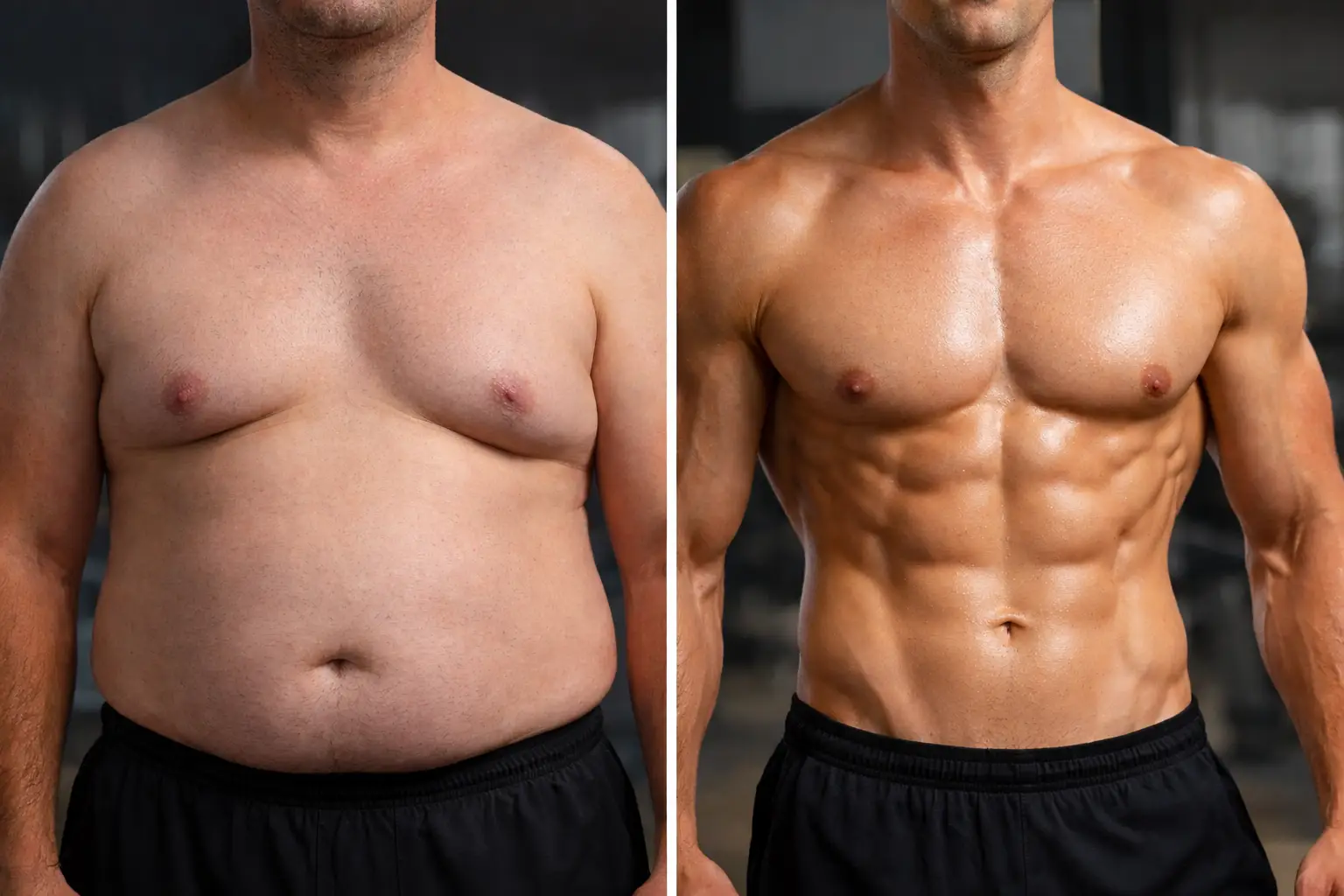
However, if you suddenly stop working out completely, those physical changes can be lost. This is called detraining.
So, what happens when you stop working out for a month or two? Over time, detraining can lead to a loss of the physical adaptations that your body created when you were working out regularly.
But how quickly does detraining occur? Let’s discuss some of the changes that you might see in your strength, athletic performance, and body composition after a short period of detraining.
Strength
A major concern that you might have after taking a break from your workouts is whether or not all of those increases in strength are going to be reversed.
The good news is that your strength likely won’t be significantly impacted by a month or two of detraining.
One study found that athletes were generally able to maintain their overall strength for up to four weeks of inactivity.
The caveat: the athletes also tended to lose some power and force that were necessary for their sports. In other words, they were just about as strong as they were prior to their break, but their overall athletic performance did decline during detraining.
A second downside to detraining is that taking a break from your exercise routine takes away from your ability to improve your fitness skills, even if you’re able to generally maintain your strength.
Another study found that men who regularly strength-trained then detrained saw declines in performance metrics like their peak power, while men who continued with their resistance training saw no such change.
Additionally, the men who detrained did not see any improvements in their jump height, while the men who continued their training were able to see improvements.
This effect is something to think about before taking a break, especially if you are an athlete and/or if you have specific strength or performance goals that you’d like to meet in a predetermined amount of time.
Overall, most people are able to lift about as much as they did before a break of a month or two.
Body composition

While your strength doesn’t seem to be too affected by a short break from weight lifting, it’s also worth considering how your body composition measurements can change through detraining.
A good example of this is the effect that shelter-in-place orders had during the early phases of the COVID-19 pandemic. In one study, researchers evaluated the fitness of men who had previously worked out regularly but stopped due to the pandemic and its subsequent social distancing regulations.
After an average of 45 weeks off of their regular training programs, the men in this study saw significant decreases in muscle mass, strength, and endurance, as well as increases in body fat and waist-hip ratio.
However, this was a very long pause in their training program (averaging almost a year for most participants). What about if you’re only taking a few months off?
Longer periods without training are generally associated with more pronounced detraining effects. So, if you’re only stopping your weight lifting training for a couple of months, you likely aren’t going to see huge changes (if the rest of your diet and physical activity stays about the same).
However, longer periods of detraining can affect your muscle size. A study on older adults found that muscle size didn’t change significantly after a shorter strength-training pause of three to six months. That said, the adults did see significant changes in their muscle size when their detraining periods reached longer terms of 8 to 13 months.
The effects of muscle loss from detraining can also be seen in other forms of strength training besides weight lifting, like Pilates.
One study evaluated the effects of three weeks of detraining on women who had done Pilates for two months. The women saw improvements in body fat percentage and visceral fat following the two months of workouts, but those percentages returned to baseline after the three weeks of no training.
On the plus side, the positive effects that Pilates had on trunk fat, thigh and waist measurements, flexibility, abdominal strength, and aerobic capacity weren’t affected by the detraining period.
But even though there does seem to be some muscle loss after certain periods of detraining, there’s some good news for lifters: the effects of detraining don’t seem to be as bad in people who lift versus people who prefer cardio.
In a study that evaluated detraining effects in resistance-trained vs. endurance-trained young men, the men who lifted weights still saw gains in strength and lean muscle mass even after 24 weeks of detraining. These gains were maintained for longer than the ones seen by the endurance-trained group.
Can you recover after a long workout break?
Yes. Returning to regular training is generally associated with a return to close to prior levels, especially after a break of a month or two.
However, some factors might cause you to take more time to fully recover from detraining.
For example, researchers evaluated the effects of training and then detraining on older women. After detraining for 12 weeks and then retraining for another 12, the women were able to mostly recoup their fat mass and body fat improvements, but their upper and lower body strength was still somewhat lower than it had been after the first round of training.
Another interesting study on older men found that, after 12 weeks of detraining, participants still preserved much of the strength, power, and Type 2 muscle fiber changes that happened after training, which led to fast recovery once they started working out again.
Several weeks away from a workout routine does not generally mean starting from scratch.
After returning to a consistent routine, prior performance often returns fairly quickly, though some measures such as body composition may take longer.
Conclusion
Taking a month or two off from strength training is unlikely to erase all of your gains. Staying active during a break and maintaining a balanced diet are generally associated with a quicker return to prior performance.
Frequently Asked Questions
How long can you go without working out before losing muscle?
The amount of time that it takes to lose muscle can vary from person to person. Factors like your age, activity level, diet, and training history can all play a role. However, research suggests that significant muscle loss typically takes longer than just a few weeks of inactivity.
Will I lose muscle if I don't workout for a month?
For most people, taking a month off from the gym will not erase all of their muscle gains. While you might notice some changes in performance, muscle fullness, or body composition, a month of detraining is unlikely to completely reverse your progress.
Do you lose muscle if you stop working out?
Detraining can lead to some muscle loss over time, but the effects are often gradual. Many people maintain much of their strength and muscle mass during shorter breaks from exercise, especially if they stay active and continue eating a balanced diet.