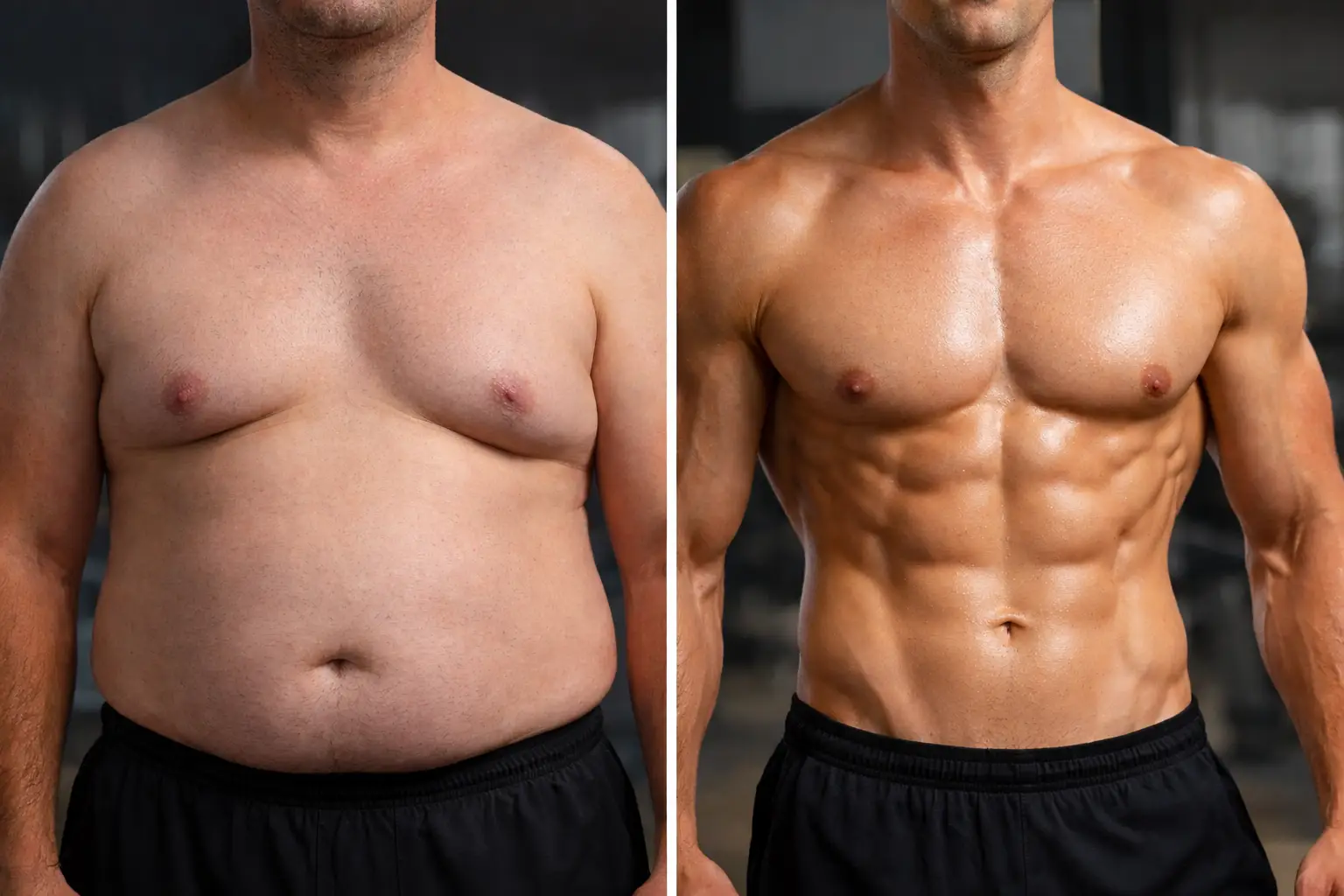

Body fat percentage sounds simple, but it carries important meaning. And 20% is a particularly interesting spot on the spectrum. It's not extremely lean, but it's not in the danger zone either. Depending on your sex, age, and goals, 20% body fat can mean very different things.
Whether you just got your results from a body composition scan and saw "20%" staring back at you, or you're trying to figure out where you stand health-wise, this guide explains what it looks like, whether it is healthy, and how it relates to body composition.
What Is 20% Body Fat?
Body fat percentage is the proportion of your total body weight that comes from fat mass, as opposed to lean mass, which includes muscle, bone, water, and organs. At 20% body fat, one-fifth of your body weight is fat tissue.
That fat isn't all bad, by the way. Your body needs a baseline amount of fat, called essential fat, just to keep things running: hormone production, brain function, organ protection, and more. The key question is whether the amount of body fat supports your health and fitness goals.
For context, body fat categories (per the American Council on Exercise) generally break down like this:
Category | Men | Women |
Essential Fat | 2–5% | 10–13% |
Athletes | 6–13% | 14–20% |
Fitness | 14–17% | 21–24% |
Acceptable | 18–24% | 25–31% |
Obese | 25%+ | 32%+ |
So right off the bat, you can see that 20% lands differently depending on whether you're male or female.

Body composition, explained.
Understand what fat mass, skeletal muscle mass, and body water reveal that BMI can't.

What Does 20% Body Fat Look Like?
Body fat distribution is highly individual; two people at exactly 20% can look noticeably different depending on genetics, muscle mass, and where their bodies store fat. That said, there are some general patterns worth knowing.
20% Body Fat on Men
At 20% body fat, most men will have a soft but not dramatically rounded physique. There's typically some visible definition in the arms and shoulders, but the midsection tends to carry a layer of fat that softens any ab definition. You might see a slight outline of muscle in certain lighting, but a six-pack isn't in the picture at this level.
The face often looks fairly lean, and the chest and legs may still appear reasonably defined. But the lower abdomen and love handles are usually where that extra fat settles first.
20% Body Fat on Women
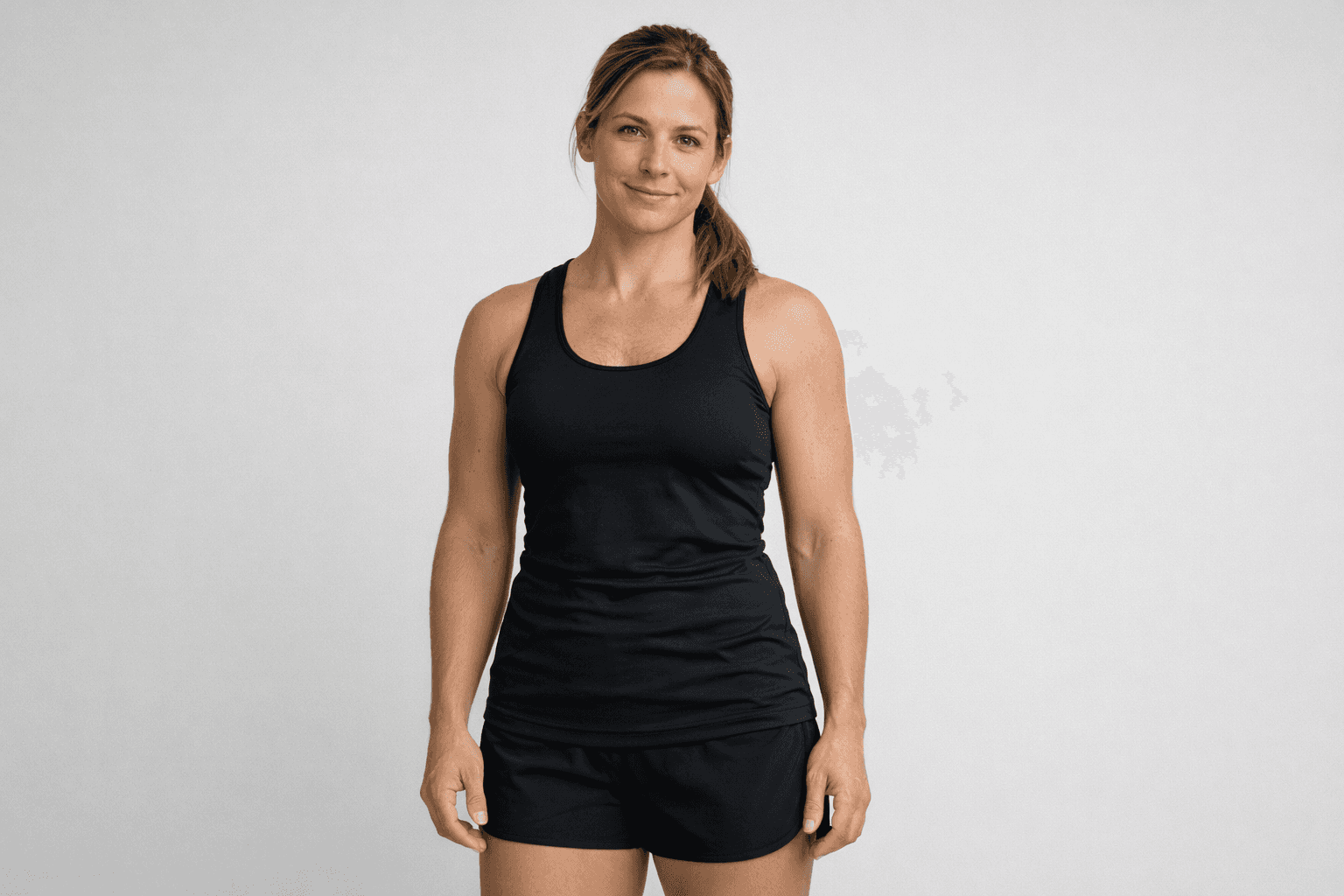
For women, 20% body fat is actually quite lean. At this level, you'd typically see visible muscle tone in the arms, legs, and sometimes the abdomen. There's still a feminine softness to the body, but the overall shape is defined and athletic-looking.
Women naturally carry more essential fat than men, so a woman at 20% is closer to the "fitness" or even "athlete" category on the ACE scale. Think: toned, active-looking, with visible muscle separation in places like the quads and shoulders.
Is 20% Body Fat Healthy?
Short answer: it depends on your sex.
For Men
For men, 20% body fat sits right at the top of the "acceptable" range before crossing into the category associated with increased health risks. It is not typically a cause for concern, but it may not represent peak metabolic health. Research has linked higher body fat percentages, even within the "normal" weight range, to greater risk of insulin resistance, cardiovascular issues, and inflammation over time.
Excess body fat is associated with several chronic diseases, including certain cancers and metabolic conditions.
If you're a man at 20% and your goal is general health, you're in a manageable spot. If performance or longevity optimization is the target, there's room to improve.
For Women
For women, 20% is genuinely healthy, and for many, it's an impressive level of leanness. It falls within the "fitness" category and is associated with good hormonal health, strong metabolic function, and low chronic disease risk. Going significantly below this range can actually start to interfere with reproductive hormones and bone density in women, so 20% is a sustainable, healthy place to be.
Bottom line: the same number reads very differently across sexes, and that's exactly why a one-size-fits-all approach to body fat doesn't work.
Is 20% Body Fat Considered "Skinny Fat"?
"Skinny fat" isn't a medical term, but it describes something real: a body that looks slim or average at a normal weight but carries a higher proportion of fat relative to muscle. Technically, this is called normal-weight obesity or, more precisely, having low muscle mass with excess fat mass.
Can 20% body fat be skinny fat? For men, yes, it's possible. If someone weighs 160 lbs with very little muscle and a high fat percentage, 20% could reflect low muscle mass rather than a truly lean build. The number on the scale might look fine, but the underlying body composition tells a different story.
For women, 20% is lean enough that skinny fat is less of a concern at this level, though it's still theoretically possible with very low muscle mass.
This is exactly why tracking body fat percentage alone isn't the full picture. Your skeletal muscle mass matters just as much. Someone with 20% fat and strong, developed muscle tissue is in a completely different metabolic position than someone with 20% fat and minimal muscle. That's what makes a full body composition analysis, not just a body fat reading, so valuable.
Can You See Abs at 20% Body Fat?
For most men, no, not at 20%. Visible abs typically start appearing in the 14–17% range, and a defined six-pack usually requires getting below 12–14%. At 20%, the subcutaneous fat layer over the abdomen is thick enough to obscure any underlying muscle definition, even if you've been doing core work consistently.
For women, the story is a bit different. At 20%, some ab definition can be visible, especially the upper abs, particularly if there's a solid base of core muscle underneath. Women don't need to get nearly as lean as men to see ab definition, due to the natural differences in fat distribution.
For men at 20% body fat, visible abs generally require lower body fat levels and greater abdominal muscle definition. For women at 20%, some abdominal definition may already be visible depending on muscle development and fat distribution.
Should You Try to Lower 20% Body Fat?
That depends on your personal goals and starting point.
For men at 20%, moving toward 15–18% may be a reasonable target if the goal is improved health markers, athletic performance, or greater muscle definition. Even a modest reduction in fat mass paired with increased muscle mass can meaningfully affect body composition and performance.
For women at 20%, lowering body fat may not be necessary. In some cases, increasing lean muscle mass may be a more useful focus than reducing body fat further.
For anyone, going below certain thresholds too quickly or without enough muscle to support the process tends to backfire. Crash dieting drops fat and muscle simultaneously, leaving you with a worse body composition than when you started. A slower, more structured approach, combining resistance training with a modest caloric deficit, is what actually moves the needle long-term.
If you are unsure how fat and muscle are distributed, the issue is usually measurement accuracy rather than motivation.
How to Accurately Measure 20% Body Fat
Estimating body fat from a mirror or a standard bathroom scale is often unreliable. To understand body composition more accurately, a reliable measurement method is needed.
InBody Body Composition Analysis
InBody body composition devices use bioelectrical impedance analysis (BIA) to send a safe, low-level electrical current through the body and measure the resistance from different tissues. Unlike basic consumer BIA scales, InBody uses multi-frequency currents and direct segmental measurement, breaking down fat mass, skeletal muscle mass, and total body water by individual body segments (arms, legs, trunk).
This level of detail makes InBody one of the most practical and accurate options for tracking body composition over time in clinical, gym, and wellness settings. You get a full report, not just a percentage, so you can see exactly where you stand on muscle and fat, and track whether your training and nutrition changes are actually working.
Ready to see where you really stand?
InBody is closer than you think — locations are in gyms, clinics, and studios nationwide.

DEXA
Dual-energy X-ray absorptiometry (DEXA) is often cited as the gold standard for body composition measurement. It uses low-dose X-rays to differentiate between fat mass, lean mass, and bone density across different body regions. It's highly accurate and very detailed, but it requires a visit to a medical or research facility, carries a small radiation exposure, and typically costs more than other options.
Skinfold Calipers
Caliper-based assessments work by pinching the skin at specific sites on the body and using those measurements to estimate total body fat through established equations. When done by a trained technician using a quality set of calipers, they can be reasonably accurate, but results vary significantly depending on the tester's skill and the equation being used. They're affordable and accessible, which makes them popular in gym settings.
At-Home BIA Scales
Consumer-grade smart scales that measure body fat via BIA are widely available and convenient, but they come with real limitations. They typically use single-frequency current through just the feet, which means they're estimating rather than directly measuring upper body composition. Hydration levels, food intake, and even time of day can swing readings by several percentage points. They're fine for spotting general trends, but not reliable enough to base major decisions on.
How to Improve Body Composition from 20%

For individuals looking to improve body composition from 20%, several evidence-based strategies are commonly used:
Resistance training plays a central role in long-term body composition improvement. Greater skeletal muscle mass is associated with a higher resting metabolic rate, better insulin sensitivity, and a leaner appearance, even before body fat percentage changes substantially. Many training programs include at least three strength sessions per week and emphasize compound movements such as squats, deadlifts, presses, and rows.
Adequate protein intake is important for body composition. Research generally supports higher protein intake for individuals trying to improve body composition, especially during a caloric deficit, because it helps support muscle retention, growth, and satiety.
When fat loss is the goal, a modest caloric deficit is commonly used. Aggressive calorie restriction is generally unnecessary and may increase the risk of muscle loss and fatigue.
Tracking body composition, rather than body weight alone, provides a clearer picture of progress. Because fat mass and lean mass can change at the same time, scale weight alone may not reflect meaningful changes. A reliable body composition analysis can show whether fat and muscle are shifting over time.
Meaningful changes in body composition usually take months, not weeks. Gradual changes in body fat, alongside maintained or improved muscle mass, are generally more sustainable than rapid shifts.
Key Takeaways Section
20% body fat means different things for men and women. For men, it's at the upper end of acceptable. For women, it's a genuinely fit, healthy level.
Appearance varies. Men at 20% typically have a soft midsection with limited muscle definition. Women at 20% often look toned and athletic.
It's not always about losing fat. Building muscle mass can shift your body composition without requiring a major cut in body fat percentage.
The "skinny fat" risk is real. The number matters less than what's behind it, fat mass vs. skeletal muscle mass. Always look at the full picture.
Abs at 20% are unlikely for men, possible for women. Genetics and muscle development play a role, but this is the general rule.
Accurate measurement matters. InBody scans provide segmental data on muscle and fat that a standard bathroom scale cannot.
Improving body composition takes time. Resistance training, adequate protein intake, and a sustainable caloric approach are commonly associated with long-term progress.
Bottom Line
A 20% body fat reading can mean different things depending on your sex, muscle mass, and overall body composition. For men, it usually sits near the upper end of a healthy range. For women, it often reflects a lean, athletic build.
The number alone doesn’t tell the full story. Strength, muscle mass, and sustainable habits matter just as much as body fat percentage. Overall health and body composition are supported by muscle mass, regular activity, and consistent nutrition over time.