If you’ve measured your body fat and landed at 30% body fat, you’re probably wondering what that actually means. Is it dangerous? Is it normal? Does it even matter if you feel fine?
The short answer: it depends on who you are. For some people, 30% body fat is a mild red flag. For others, it's squarely within an acceptable range. But to make sense of it, you need more than a number; you need context. This guide explains what 30% body fat means, what it looks like on a real body, and how to measure it accurately.
What Is 30% Body Fat?
Body fat percentage is the proportion of your total body weight that's made up of fat tissue. So if you weigh 150 pounds and carry 45 pounds of fat, your body fat percentage is 30%.
The rest of your weight, the other 70%, is called lean mass. That includes muscle, bone, organs, water, and connective tissue. Body fat itself isn't inherently bad: it's necessary. Fat stores energy, cushions organs, regulates hormones, and supports brain function. The problem isn't fat itself; it's having too much of it relative to your lean mass.
At 30%, this represents a higher proportion of body fat relative to lean mass. Depending on your sex, age, and fitness level, this could range from borderline acceptable to moderately above a healthy threshold.
To put that into context, widely used classifications from organizations like the American Council on Exercise (ACE) break body fat ranges down like this:
Category | Men | Women |
Essential Fat | 2–5% | 10–13% |
Athletes | 6–13% | 14–20% |
Fitness | 14–17% | 21–24% |
Acceptable | 18–24% | 25–31% |
Obese | 25%+ | 32%+ |
This shows that 30% body fat is interpreted differently depending on sex. For men, it falls into the obese category. For women, it sits at the upper end of the acceptable range, just below the threshold typically classified as obesity.

Body composition, explained.
Understand what fat mass, skeletal muscle mass, and body water reveal that BMI can't.

What Does 30% Body Fat Look Like?
Visually, 30% body fat doesn't look the same on everyone. Height, muscle mass, bone structure, and where your body stores fat all shape the picture. That said, there are general patterns worth knowing.
30% Body Fat in Men
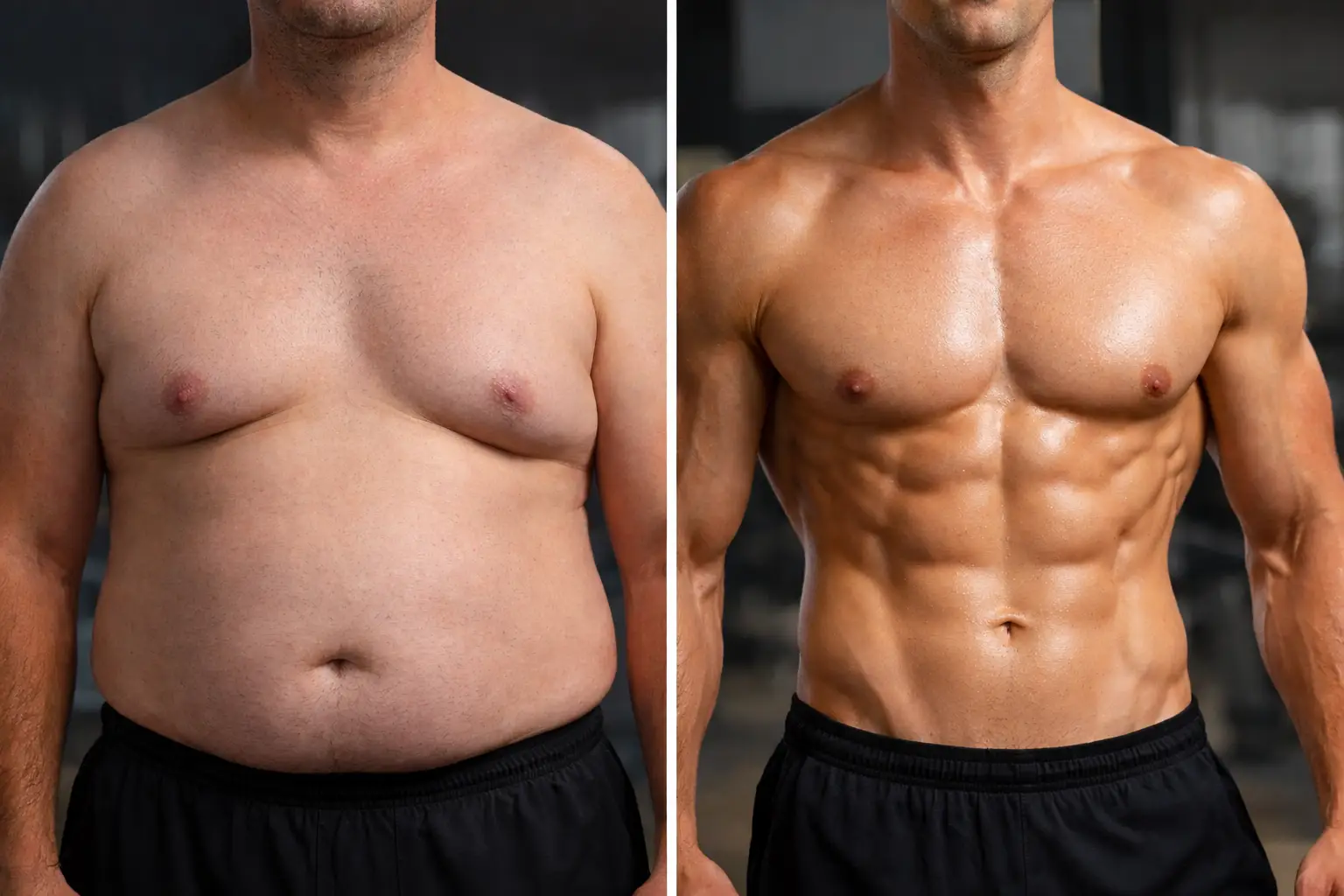
For men, 30% body fat is typically noticeable. A soft, rounded midsection is commonly observed, with abdominal fat visible both standing and sitting. The waistline is wider than the hips in many cases, and there's little visible muscle definition. Arms, thighs, and chest may appear soft rather than toned.
Face and neck can show some fullness, and love handles are common. At this level, a man is generally in the "obese" classification by most clinical standards, even if he doesn't appear extremely overweight in clothing.

30% Body Fat in Women
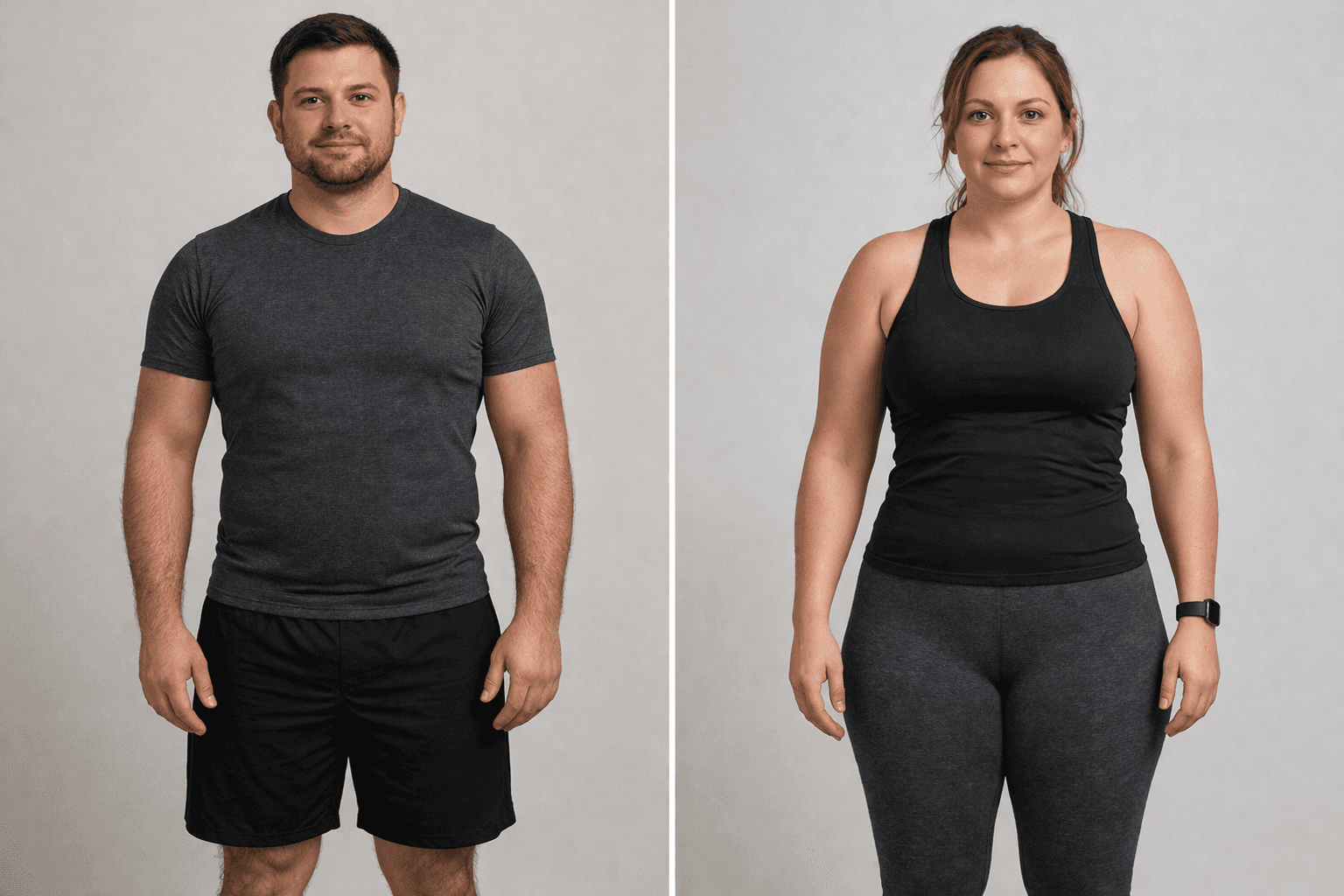
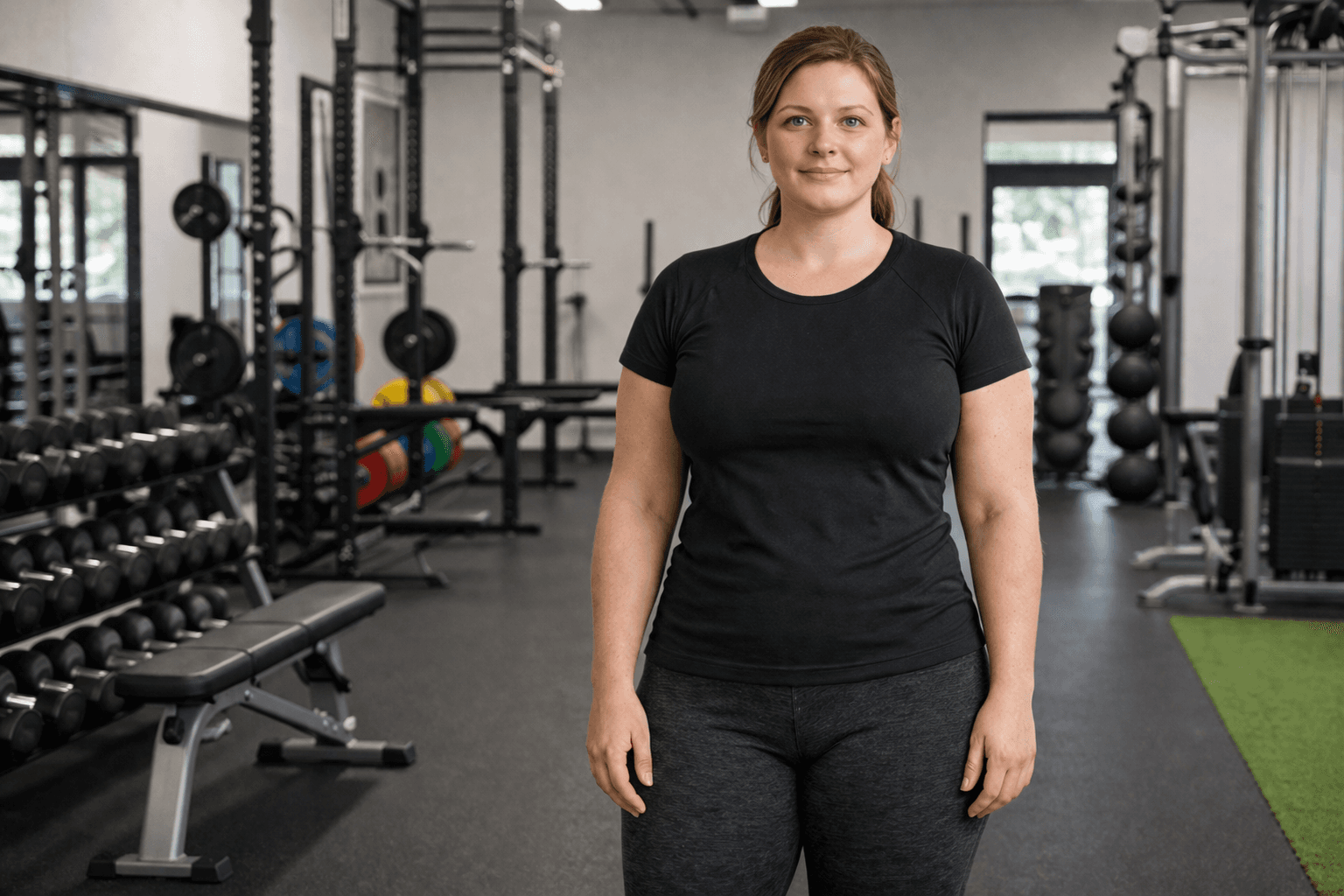
For women, 30% body fat looks quite different, and it's classified differently, too. Most health organizations consider 25–31% body fat to be in the "acceptable" to "average" range for women. At exactly 30%, a woman might have a soft but not dramatically round physique.
Some muscle definition may still be visible, particularly in the arms and legs, though the midsection tends to carry visible softness. Hips and thighs often carry a larger share of fat in women due to hormonal fat distribution patterns. Many women at 30% may not appear clinically overweight and can look average in everyday settings.
The takeaway: the same percentage looks and functions very differently depending on sex.
Is 30% Body Fat Healthy?
Health is about more than aesthetics.
For Men
For men, 30% body fat is generally considered high enough to impact long-term health. At 30%, the associated health risks start to become more relevant, including increased likelihood of insulin resistance, elevated triglycerides, higher blood pressure, and greater cardiovascular strain. A key factor here is visceral fat, the fat stored around internal organs, which tends to increase at higher body fat levels and is strongly linked to metabolic disease.
This does not mean every man at 30% body fat is unhealthy or at immediate risk. But it does mean the risk profile is elevated compared to someone in the 15–20% range. If metabolic markers such as fasting glucose, blood pressure, or cholesterol are elevated, body fat at 30% may increase associated risks.
For Women
For women, 30% body fat sits near the upper end of the generally accepted range. As body fat increases beyond this point, the likelihood of metabolic issues, such as reduced insulin sensitivity and higher inflammation, begins to rise more noticeably.
At this level, most women don't face acute health risks from body fat alone. Hormones, bone density, and metabolic health are generally not severely impacted at 30%. That said, trending upward from here does increase risk, so 30% can be a useful signal to pay attention to without treating it as an emergency.
Age matters here, too. Body fat tends to increase naturally with age, so a 50-year-old woman at 30% may have a different health context than a 25-year-old at the same number.
Can You See Abs at 30% Body Fat?
At 30% body fat, visible abdominal definition is not expected. Visible abdominal definition requires a level of body fat that's significantly lower than 30%.
For men, abs typically become visible somewhere in the 10–15% range. For women, visible definition in the midsection usually starts appearing around 18–22%, depending on genetics and muscle development.
At 30%, there's enough subcutaneous fat over the abdominal muscles that no amount of core training will make them visible from the outside. Abdominal muscles may be developed but are typically not visible due to subcutaneous fat. This is actually a useful mental model: training abs builds the muscle, but reducing body fat is what reveals it. They're two separate goals that both need to be addressed.
Visible abdominal definition generally requires lower body fat levels alongside resistance training and appropriate nutrition.
Should You Try to Lower 30% Body Fat?
Not everyone at 30% body fat needs to pursue aggressive fat loss. The right answer depends on your health markers, your goals, your current lifestyle, and your sex.
When Fat Loss Makes Sense
For men at 30%, reducing body fat is a reasonable goal from both a health and quality-of-life standpoint. Dropping into the 18–24% range reduces cardiovascular risk, improves metabolic function, and typically increases energy, sleep quality, and joint comfort.
For women at 30%, the decision is more nuanced. If metabolic health markers are in good shape and you feel well, maintaining at 30% while gradually building muscle may serve you better than an intense cutting phase. Getting down to 22–27% is a realistic and healthy target for most women who want to improve composition.
For both sexes, if warning signs such as pre-diabetes, elevated blood pressure, fatigue, or high triglycerides are present, reducing body fat may be more clinically important.
Realistic Targets
A sustainable fat loss rate is around 0.5–1% of body weight per week. Faster than that tends to eat into muscle mass, which is counterproductive if your real goal is improving body composition rather than just watching the scale drop.
A target range is often more practical than a single number. For men, aiming for 20–22% is a meaningful, achievable improvement from 30%. For women, targeting 24–26% is a realistic improvement that supports both health and appearance goals. Periodic reassessment (e.g., every 8–12 weeks) can provide a more accurate picture than focusing on daily fluctuations.
How to Accurately Measure 30% Body Fat
Knowing you're at 30% body fat starts with actually measuring it accurately. The method you choose affects reliability significantly.
InBody Body Composition Analysis
InBody body composition devices use bioelectrical impedance analysis (BIA) in a more sophisticated configuration, multiple frequencies and segmental analysis across different body segments. Many fitness centers, clinics, and sports medicine facilities offer InBody testing.
It's fast, non-invasive, and provides a detailed breakdown of fat mass, lean mass, and even water distribution. Accuracy is generally considered good when tested under consistent conditions (same time of day, same hydration level).
Ready to see where you really stand?
InBody is closer than you think — locations are in gyms, clinics, and studios nationwide.

DEXA Scan
DEXA (Dual-Energy X-ray Absorptiometry) is considered the gold standard for body composition measurement. Originally developed for bone density testing, it also produces highly accurate readings for fat mass and lean mass.
A DEXA scan takes about 10 minutes, involves very low radiation exposure, and provides precise data including regional fat distribution, so you can see where exactly fat is stored. It's available at many medical imaging centers and universities. Cost typically runs $50–$150 depending on location.
Skinfold Calipers
Skinfold testing involves pinching fat at specific body sites and using those measurements in a formula to estimate overall body fat percentage. When performed by a trained professional, it's reasonably accurate, typically within 3–4% of true body fat.
The limitation: it's highly dependent on the skill of the person doing it. Self-testing is possible but error-prone. Consistent testing by the same person over time tends to be more useful for tracking changes than a single measurement.
At-Home BIA Scales
Consumer body fat scales use basic bioelectrical impedance to estimate body fat. They're convenient but not highly accurate, results can swing by 5% or more depending on hydration, time of day, and recent meals.
They're best used as a rough trend tracker rather than a precise measurement tool. Single readings from consumer BIA scales may not be reliable for decision-making.
How to Improve Body Composition from 30%
Reducing body fat from 30% isn't complicated, but it does require consistency across several interconnected habits. Several factors are commonly associated with improving body composition.
Resistance Training
Building lean muscle is your highest-leverage tool for improving body composition. Muscle tissue is metabolically active, meaning it burns more calories at rest than fat does. Adding muscle while losing fat changes the ratio, which is the actual goal.
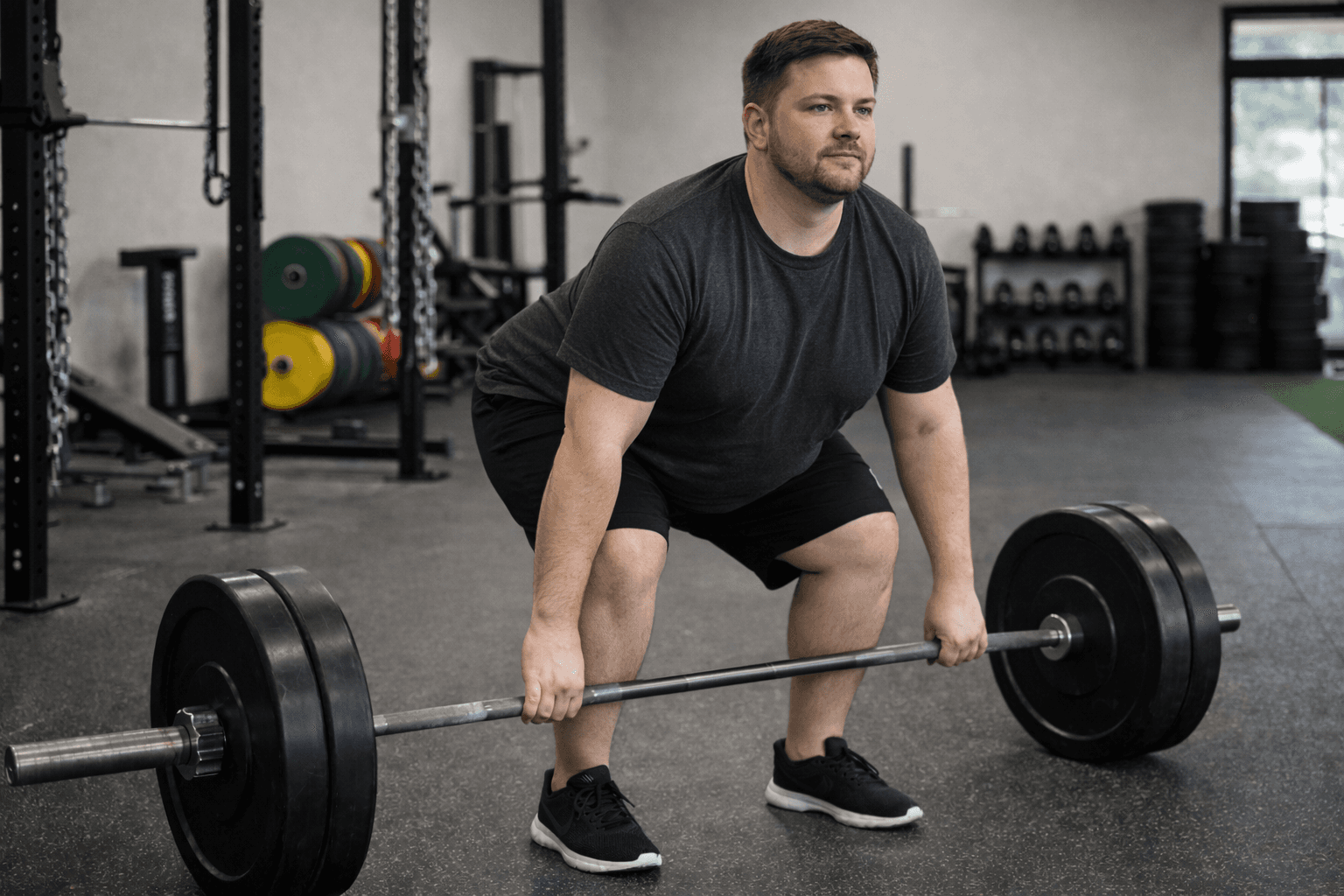
Many programs include 3–4 resistance training sessions per week. Compound movements like squats, deadlifts, rows, and presses deliver the most return on your time investment. High-level training is not required to see improvements; you just need to progressively challenge your muscles over time.
Protein Intake
Protein is the single most important macronutrient for body composition change. It supports muscle retention during a caloric deficit, keeps you fuller longer, and has a higher thermic effect than carbohydrates or fat (meaning your body burns more calories just digesting it).
Research commonly supports higher protein intake in the range of 0.7–1 gram per pound of body weight. If you weigh 180 pounds, that's 125–180 grams of protein per day. Prioritize whole food sources: chicken, fish, eggs, Greek yogurt, legumes, and lean red meat.
Caloric Deficit
No matter what approach you take, fat loss requires consuming fewer calories than you burn. A moderate deficit of 300–500 calories per day produces steady fat loss without triggering the hormonal stress response that comes with extreme dieting.
Tracking food intake can help provide a clearer picture of calorie intake. Most people significantly underestimate portion sizes and liquid calories.
Lifestyle Factors
Sleep, stress, and alcohol all affect body fat in ways that calorie math alone doesn't capture. Poor sleep raises cortisol and ghrelin (your hunger hormone), making fat loss harder. Chronic stress promotes visceral fat storage. Alcohol adds empty calories and disrupts fat oxidation.
Getting 7–9 hours of quality sleep, managing stress actively, and reducing alcohol to 1–2 drinks per week can meaningfully accelerate your progress.
Track Composition (Not Just Weight)
The scale is a poor tool for tracking body composition progress. If you're gaining muscle while losing fat, your weight might barely move, but your composition is improving significantly. Use body measurements, progress photos, and periodic body fat assessments to track what's actually changing.
Key Takeaways
30% body fat falls in the "obese" range for men (healthy is 18–24%) and at the high end of "acceptable" for women (healthy is 21–31%).
Visually, men at 30% typically show a soft, rounded midsection with little definition: women at 30% often look average or slightly soft, especially around the hips and waist.
Abs are not visible at 30% body fat for either sex. Significant fat reduction is needed before muscle definition appears.
The best measurement methods are DEXA scans and InBody assessments. At-home scales are convenient but imprecise.
Reducing body fat from 30% involves resistance training, high protein intake, a moderate caloric deficit, and lifestyle changes, not just cardio.
Track body composition changes over time, not just bodyweight, to get an honest picture of your progress.
Bottom Line
At 30% body fat, you're at a decision point, not a crisis, but not a place to ignore either. For men, it's a clear signal that reducing fat and building lean mass would benefit both health and quality of life. For women, it's the upper boundary of acceptable, which means now is a good time to pay attention before numbers trend higher.
The most useful thing you can do right now is get an accurate body composition measurement, not just step on a scale. From there, a consistent combination of resistance training, adequate protein, modest caloric reduction, and better sleep habits can realistically get you to a healthier range within a few months.
A dramatic transformation plan is not necessary. Consistent habits play a key role in long-term progress.